Do You Have to Tell People They Are Being Recorded?

Wired
Quick Answer: In New Mexico, you usually do not have to tell people they are being recorded on video in public areas of your business. Still, posting a sign is smart and expected. Audio is the stricter part, and private areas have different rules, so know the limits before you rely on your cameras.
Do you have to tell people they are being recorded at your business? For video in the open areas of a New Mexico business, the answer is usually no, because people do not expect privacy on a sales floor or in a lobby. Even so, a simple recording sign protects you and builds trust. Where it gets tricky is audio and private spaces, and that is where a smart owner slows down.
You installed cameras to protect your staff, your customers, and your property. That is the easy part. Knowing when you have to tell people about it, and when a sign is just good manners, keeps your system working for you instead of against you.
Quick note: this article explains the general rules, not legal advice. Recording and notice laws shift by situation, so run your exact setup past a New Mexico attorney before you count on it.
Do You Have to Tell People They Are Being Recorded in New Mexico?
In most cases, you do not have to tell people they are being recorded on video in the public areas of your business in New Mexico. The law ties notice to privacy. In a spot where people have no reasonable expectation of privacy, like a store floor or a parking lot, video recording without a sign is generally allowed.
The picture changes for audio and for private spaces. Audio recording follows stricter consent rules, and areas like restrooms or changing rooms carry a real expectation of privacy. So the honest answer is: for open-area video, usually no, but for audio and private areas, tread carefully.
Should You Post a Security Camera Sign Anyway?
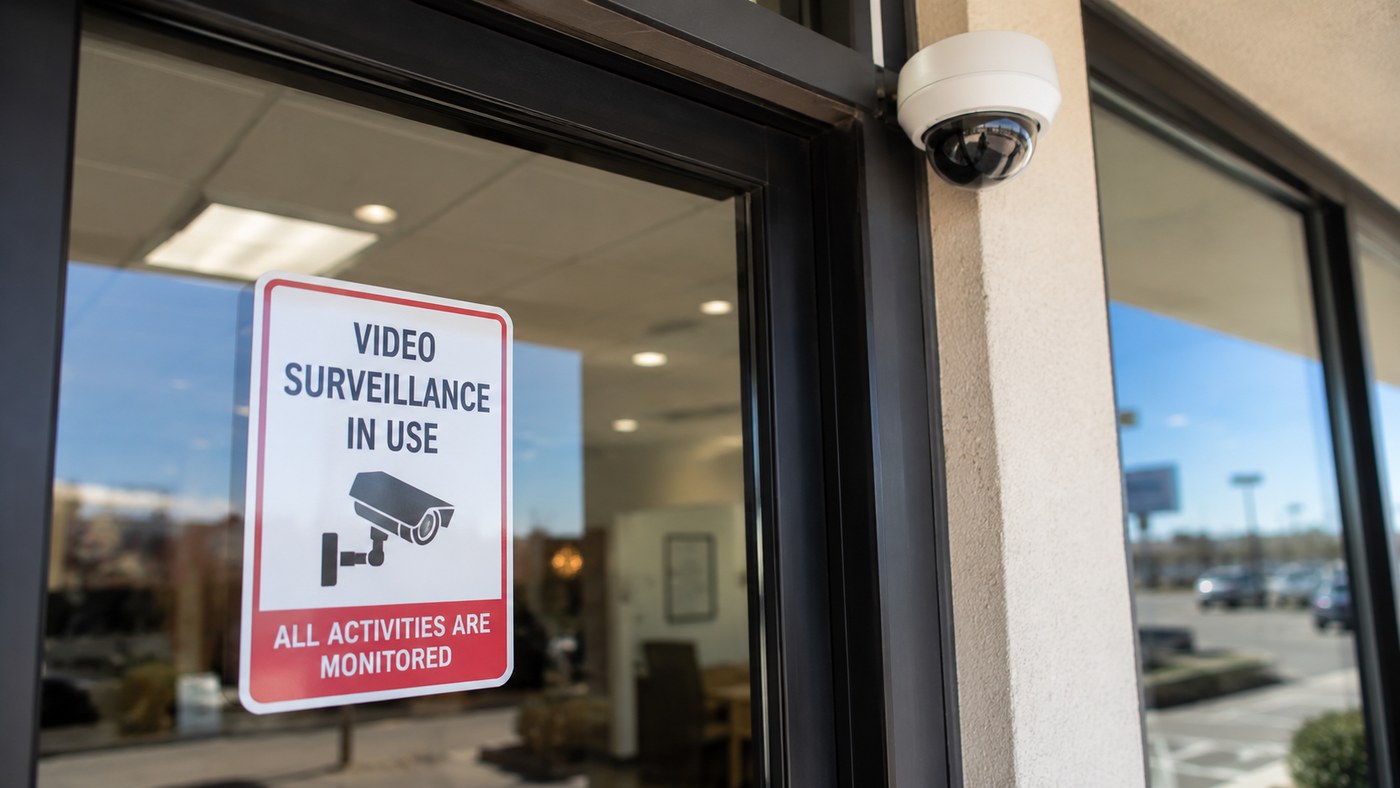
Yes, you should post a security camera sign even when the law does not force you to. A visible sign does two jobs at once. First, it warns off would-be thieves who see the property is watched. Second, it shows customers and staff you are upfront about your cameras.
A sign also helps if an incident ever ends up in a dispute. When people were clearly told, they have a harder time claiming they had no idea. So a small sign at the entrance protects you legally and deters crime at the same time. That is a lot of value from a cheap piece of signage.
What Should a Recording Sign Say?
A good recording sign is short, clear, and easy to spot. It does not need legal language to work. It just needs to tell people plainly that cameras are in use.
- Simple wording like "These premises are under video surveillance."
- Placement at every main entrance and in high-traffic areas.
- Large enough text that people can read it before they enter.
- A note about audio if you record sound, since that raises the bar.
Keep the message visible and consistent across your locations. When every door carries the same clear notice, no one can say they were surprised.
When Do You Legally Have to Give Notice?
You legally have to give notice when you record in a place where people expect privacy or when you capture audio. Those are the two big triggers. Miss them, and a recording meant to protect you can turn into a legal problem.
Here is where notice and consent matter most:
- Audio recording: New Mexico follows one-party consent, so sound carries stricter rules than video. Our guide on recording audio on security cameras in New Mexico breaks that down.
- Private areas: restrooms, locker rooms, and changing areas are off limits for cameras, period.
- Employee spaces: break rooms and private offices carry a higher privacy expectation than open work areas.
So the rule of thumb is simple. Open, public-facing video usually needs no notice, while audio and private spaces do. When in doubt, add the sign and skip the private areas.
Where Can You Never Put a Camera?
You can never put a camera in a place where people undress or expect full privacy, no matter what sign you post. Restrooms, changing rooms, locker areas, and similar spaces are always off limits. A sign does not make recording there legal.
This is the mistake that lands owners in real trouble. A camera aimed at a private space can bring criminal charges and lawsuits, even if the goal was security. So keep cameras on entrances, sales floors, hallways, parking lots, and storage areas, and keep them out of any space tied to personal privacy.
Does a Sign Protect You From Liability?
A clear recording sign helps protect you from liability, though it is not a free pass to record anywhere. Notice lowers the chance someone claims they were recorded without knowing. That matters if an incident leads to a complaint or a lawsuit.
Still, a sign cannot fix an illegal camera placement. Posting notice on a restroom door does not make recording inside legal. So use signs to cover your legal areas well, and rely on smart placement, not signage, to stay clear of the off-limits ones. Wired plans commercial security camera installation that keeps your coverage strong and your placement clean across Albuquerque and New Mexico.
Plan Placement Before You Mount a Single Camera
Planning placement before you mount anything keeps you legal and gets you better footage. A rushed install often points cameras where they should not go or misses the spots that matter. A real plan solves both.
Wired walks your property, flags the private zones to avoid, and aims each camera where it does the most good. For the ownership side of your footage, our guide on who legally owns your security camera footage after a crime is worth a read too. Good planning up front saves you from a costly redo later.
What About Recording Customers and Employees?
You can record customers and employees on video in the open areas of your business, but you owe them clear notice and clean placement. Customers on a sales floor and staff in a work area have little expectation of privacy, so video there is usually fine. A posted sign keeps everyone informed.
Private spaces are the line you do not cross. Keep cameras out of break rooms, private offices, and any personal area. Being open with your team about where cameras are and why builds trust and heads off complaints before they start.
Set Up Cameras That Protect You the Right Way
Set up cameras that protect you the right way by pairing clear notice with smart, legal placement from the start. A camera system only helps when it holds up legally as well as physically. The wrong setup can create the very problems you were trying to avoid.
Wired designs and installs commercial security camera systems for businesses across Albuquerque and all of New Mexico, with placement and signage planned to keep you covered and compliant. Contact us for a free assessment and get a camera system that protects your business without the legal guesswork.