Will the Copper Shutdown Affect Your Fire Alarm?

Wired
Quick Answer: Yes. If your fire alarm still sends its signals over an old copper phone line, the copper shutdown can affect it. When that line goes dead, your panel may stop reaching the monitoring center, and it often happens with no warning light and no sound. The good news is the fix is small and quick.
Will the copper line shutdown affect your fire alarm? If your system still calls out over an old copper phone line, then yes, it can, and most owners have no idea. Phone companies are turning those copper lines off for good, and any alarm that leans on them can go silent at the worst possible time. We have installed and serviced fire alarms across Albuquerque since 2005, so we will keep this simple and honest. Below is what is happening, how to tell if it touches your building, and the easy way to stay protected.
This affects more local businesses than you might expect. Offices, schools, clinics, warehouses, and older retail buildings around Albuquerque often still run alarm signals over copper without anyone realizing it.
What Is This Copper Line Shutdown?
Copper lines are the old landline phone wires that have run to buildings for more than a hundred years. Carriers like AT&T are now retiring them to make room for fiber and wireless service. In fact, AT&T plans to begin shutting down copper in roughly 500 areas starting in 2026, and federal rules now let them move faster than before. You can read the FCC's plain-language overview of the copper transition if you want the full picture. For most cell phone and internet users, this change passes by quietly. For a fire alarm that still dials out over copper, it is a very different story.
How Do I Know If the Copper Shutdown Affects My Fire Alarm?
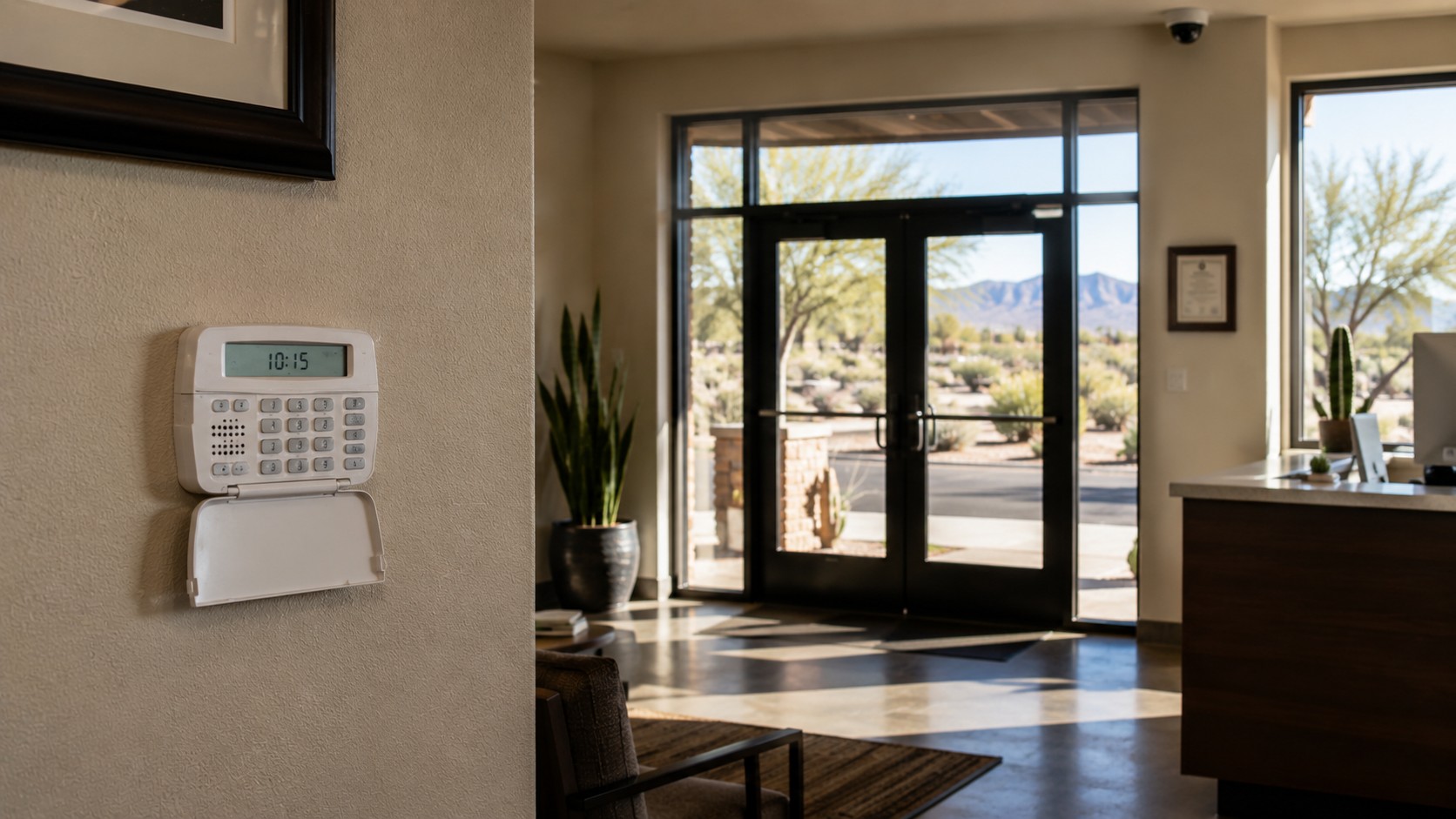
Most older fire alarms send their signals over a phone line, so if yours went in more than a few years ago, there is a real chance it still uses copper. Here is the simple way to check it yourself. Look at the fire alarm panel on your wall. If you see one or two phone-style jacks with thin wires running into it, your alarm most likely talks over a phone line.
If you are not sure, that is completely normal, and you should not have to guess. A technician can confirm what your panel uses in just a few minutes.
What Goes Wrong When the Line Shuts Off?
When the copper line dies, your fire alarm keeps watching for smoke, but it can no longer call for help. The detectors still work inside the building. The trouble is the signal. The panel tries to reach the monitoring center, the call never connects, and nobody gets dispatched.
Worse, this rarely shows up as a loud, obvious failure. The phone company's shutoff notice usually goes to whoever pays the phone bill. Then it gets filed and forgotten. Months later, the line is gone and no one knows the alarm went quiet.
That silence creates real problems:
- The monitoring center stops receiving your alarm's signals, which can put you out of step with fire code.
- Your local fire marshal can flag the dead line during an inspection, and some jurisdictions require a costly fire watch until you fix it.
- Many insurance policies require working alarm monitoring, so a dead line can turn into a coverage headache after a claim.
The same warning applies to your burglar alarm. If your intrusion system dials out over the same kind of line, it can go dark right alongside your fire panel.
Can't I Just Switch My Fire Alarm to Internet Phone Service?
No, plain internet phone service is not a safe swap for a fire alarm. Regular VoIP scrambles the special tones a fire panel uses to send an alarm, so the signal can arrive broken or never arrive at all. Because of that, this setup usually fails a fire inspection, even when the phone still seems fine for normal calls. So the replacement needs to be built for life safety, not borrowed from your office phone system.
The Fix Is Smaller Than You Think
The best part is that the fix is quick, and you almost never need a whole new system. We swap the small part that does the talking, called the communicator, so your alarm sends its signals over a cellular network or the internet instead of copper. Our fire alarm team keeps your existing panel right where it is and simply changes how it reaches the monitoring center.
A cellular communicator runs on its own wireless connection, includes a backup battery for power outages, and checks in far more often than an old copper line ever did. For buildings that want extra protection, a dual-path option uses both internet and cellular, so if one path drops, the other keeps your alarm talking. Most upgrades take only a couple of hours. We also confirm your alarm monitoring picks up the new signal cleanly, so you never have a gap in coverage.
While we are on site, we can also check the other devices that quietly lean on copper. Elevator emergency phones are a common one, since they run into the very same problem when the line retires. Catching all of it in a single visit saves you a second service call later.
How Much Does the Upgrade Cost, and How Long Does It Take?
The upgrade usually costs far less than people fear, and it rarely takes long. Because we keep your existing panel, you only pay for the new communicator and the visit, not a brand-new fire alarm system. Most swaps wrap up in about two hours, so your day barely gets interrupted.
Here is the part that surprises people. Many businesses actually spend less every month after the switch. An old copper line can carry a steep monthly bill that keeps climbing as carriers push customers off of it, while a cellular connection usually runs a good deal cheaper. So this becomes one of the rare safety upgrades that can pay for itself over time. Before any work starts, we hand you a clear, written quote, so you never face a surprise on the invoice.
Why Albuquerque Owners Shouldn't Wait on This
The smart move is to handle this before your line shuts off, not after. AT&T's first wave of copper shutdowns begins in 2026, and the notices can arrive with very little lead time. When that line goes, a missed alarm signal is not something you want to discover during an actual fire.
Because we are based right here in Albuquerque and have served local businesses since 2005, you get a real person who will come look at your panel. You are not calling a call center three states away that has never set foot in your building.
What Should You Do Right Now?
You do not need to overhaul anything today, but a few small steps will keep you ahead of the shutdown. Start here:
- Find out what your alarm uses. Check your panel for phone-style jacks, or ask us to confirm whether it still runs on copper.
- Watch your mail and email. Copper shutoff notices often land with whoever pays the phone bill, so make sure those notices reach the person who handles your building.
- Plan the swap before the line dies. A quick communicator upgrade now beats a frantic scramble after your alarm has already gone quiet.
Handle those three things, and you will never have to wonder whether your fire alarm can still call for help.
Let's Make Sure Your Alarm Still Calls for Help
Not sure if your fire alarm is still running on copper? Let us take a look. We will check your panel, tell you straight whether the copper shutdown affects you, and walk you through your options with zero pressure. A fire alarm that quietly stops calling for help is the kind of problem you only discover at the worst possible moment, and we would much rather you never learn that the hard way. Reach out to our Albuquerque team, and we will help you keep your building protected.