Evolv vs Traditional Metal Detectors: What's the Difference?

Wired
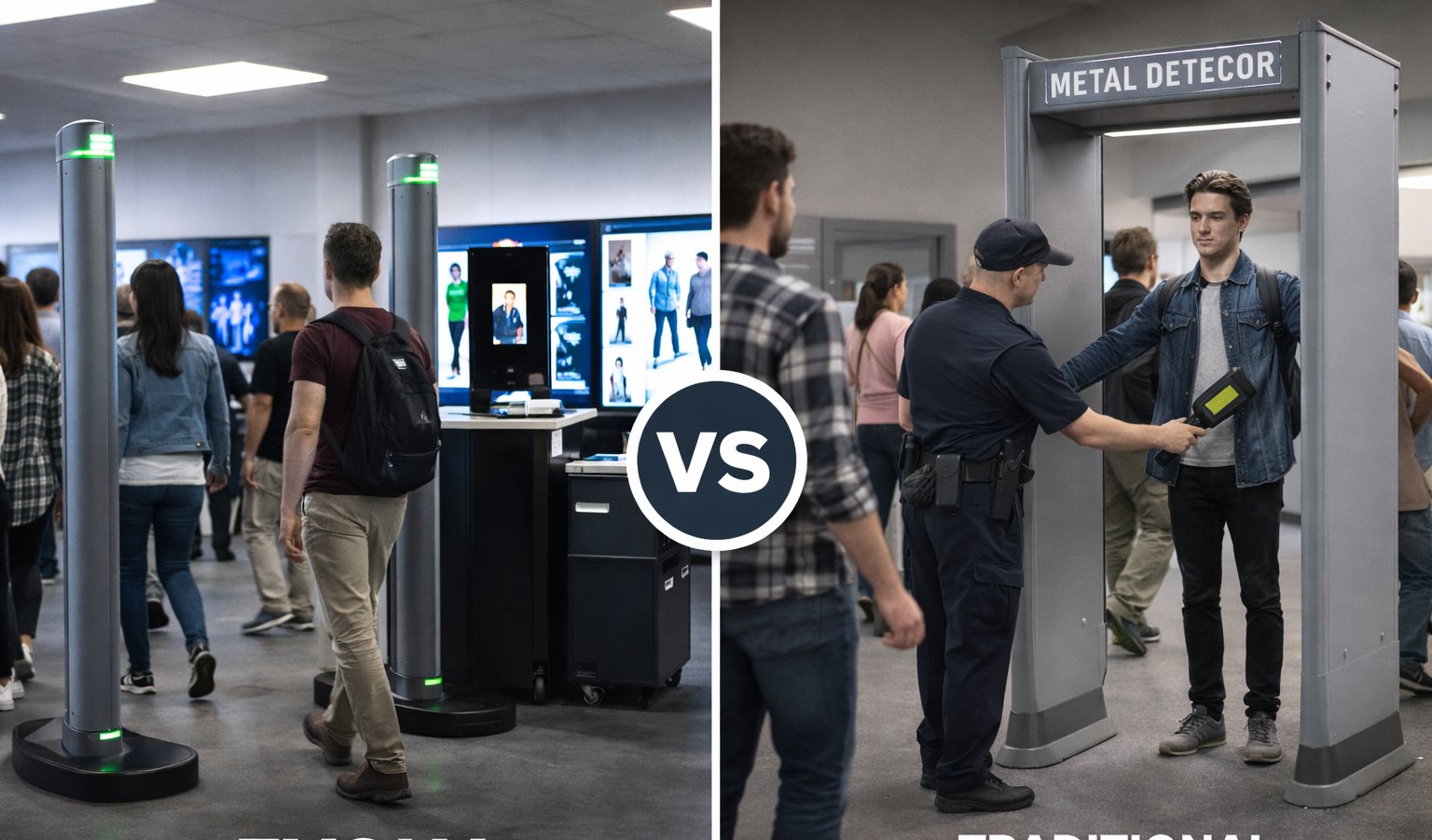
Traditional metal detectors work by detecting any metal object passing through an electromagnetic field, triggering alarms for guns, knives, keys, phones, belt buckles, and jewelry without distinguishing between threats and harmless items. Evolv weapons detection systems use artificial intelligence and advanced sensors to identify actual weapons while ignoring everyday metal objects people carry, creating a fundamentally different screening experience where people walk through naturally without stopping or removing items. The core difference isn't just technology—it's a complete shift from "detect all metal and investigate everything" to "identify actual weapons and ignore harmless objects."
Evolv vs traditional metal detectors is one of the biggest debates in security screening right now. Both systems help protect people at schools, stadiums, hospitals, and workplaces. However, they work in very different ways—and the right choice depends on your facility, your budget, and your security goals.
Evolv uses AI-powered sensors to tell the difference between weapons and everyday items. Traditional metal detectors use magnetic fields to alert on all metal objects. Each approach has clear strengths and trade-offs worth understanding before you invest.
How Traditional Metal Detectors Work
Traditional walk-through metal detectors have been the security standard for decades. You've seen them at airports, courthouses, and concert venues. They create a magnetic field that reacts to any metal object passing through.
When someone walks through, the system alerts if it detects metal. This means keys, phones, belt buckles, and coins all trigger the alarm—along with weapons. As a result, security staff must check each person one at a time.
Here are the main features of traditional metal detectors:
- Proven reliability—they detect all types of metal regardless of the object
- Single-file screening—people must empty pockets and remove bags before walking through
- Lower upfront investment—generally more affordable than AI-powered alternatives
- Simple operation—minimal training needed for security staff
- Trusted track record—used in high-security environments for years
Traditional systems are dependable and well understood. They've protected courthouses, airports, and government buildings for a long time. However, they do create bottlenecks during high-traffic periods because of slow, single-file screening.
How Evolv Weapons Detection Systems Work
Evolv Technology takes a completely different approach. Their flagship product—Evolv Express—combines sensor technology with artificial intelligence. The system uses low-frequency electromagnetic fields similar to traditional detectors but adds AI software on top.
The AI is designed to distinguish between harmless everyday items and potential weapons like firearms. This means people can walk through without emptying their pockets or slowing down. Additionally, two people can pass through the system at the same time.
Key features of Evolv's system include:
- AI-powered screening designed to filter out common items like phones and keys
- Free-flow dual-lane entry so visitors don't stop or slow down
- Visual threat alerts that show where on the body a potential threat may be
- Cloud-connected analytics with reporting dashboards for security teams
- High throughput—capable of screening up to 3,600 people per hour
On the surface, this sounds like a major upgrade. But there are important trade-offs you should understand before choosing Evolv over traditional metal detectors.
Evolv vs Traditional Metal Detectors: Speed and Throughput
Speed is where Evolv stands out the most. Traditional metal detectors screen one person at a time. Each visitor must stop, empty their pockets, and walk through slowly. This creates long lines at busy venues.
Evolv claims their system screens up to 10 times faster than traditional metal detectors. People keep walking at a normal pace. They don't need to stop or remove items from their pockets or bags.
For stadiums, arenas, and large events, this speed advantage is significant. It means shorter wait times and a better visitor experience. Schools also benefit because students can enter the building each morning without major delays.
Detection Accuracy: Evolv vs Traditional Metal Detectors
Accuracy is arguably the most critical factor in this comparison. Both systems have strengths and limitations that security teams need to understand.
Traditional Metal Detector Accuracy
Traditional metal detectors are extremely reliable at detecting metal. If someone carries any metal object through the gate, it will alert. The downside is false alarms—keys, phones, and belt buckles all trigger the system. Security staff must then manually screen each person who sets off the alarm.
Evolv Detection Accuracy
Evolv's AI is designed to reduce those false alarms by ignoring common items. However, the system has faced scrutiny. Independent testing has shown that Evolv can still false-alarm on items like laptops, water bottles, and umbrellas. Additionally, critics have raised concerns about the system's ability to consistently detect smaller weapons like knives.
No security screening system is perfect. Both Evolv and traditional metal detectors work best as part of a layered security strategy. The technology is only as effective as the trained professionals operating it.
Ease of Use and Training Requirements
Traditional metal detectors are straightforward. They require minimal training to operate. A security officer watches the gate and responds when the alarm sounds. There's no software to learn and no cloud dashboard to manage.
Evolv's system is more complex. It uses visual alerts on a tablet screen to show where a potential threat is located on the person's body. Security staff need training on how to read these alerts and respond correctly. The system also connects to cloud-based analytics, which requires some IT coordination.
On the other hand, Evolv's visual alerts can help guards perform faster secondary screenings. Instead of wanding someone's entire body, they focus on the specific flagged area. This saves time when the system does trigger an alert.
Where Each System Works Best
Choosing between Evolv and traditional metal detectors often comes down to your specific environment and security priorities.
Traditional metal detectors work best for:
- High-security locations like courthouses and government buildings
- Smaller venues with lower foot traffic
- Budget-conscious organizations looking for a more affordable screening option
- Sites requiring maximum sensitivity where every metal object must be flagged
Evolv systems may work better for:
- Large stadiums and arenas with thousands of visitors per event
- Schools that need to screen hundreds of students quickly each morning
- Hospitals and healthcare facilities focused on patient and visitor experience
- Properties with high foot traffic and multiple entry points
Regardless of which system you choose, the technology alone won't keep people safe. Trained security professionals must operate and support any screening system. The best security plans combine advanced technology with experienced teams who know how to assess threats and respond in real time.
If you're exploring Evolv weapons detection for your facility, working with an experienced integrator ensures your system is properly installed, configured, and supported from day one.
The Bottom Line on Evolv vs Traditional Metal Detectors
Both Evolv and traditional metal detectors play important roles in modern security. Traditional systems offer proven reliability and a lower price point. Evolv offers faster throughput and a smoother visitor experience—but comes at a premium and with some ongoing questions about detection accuracy.
The smartest approach is to think of weapons screening as one piece of a larger security strategy. No scanner—old or new—replaces the need for proper planning, trained personnel, and a layered approach to protecting your facility.
Ready to find the right weapons detection solution for your property? Contact Wired today for a free consultation. Our team will assess your facility, recommend the right technology, and handle the complete installation so you can focus on what matters most—keeping people safe.