Hybrid Cloud Video Storage: Why It Beats DVR for Businesses

Wired
Hybrid cloud video storage is the biggest upgrade in business security cameras in the last decade — and most business owners have never heard of it. If you're still running a DVR or NVR system to store your security footage, you're one power surge, one theft, or one hard drive failure away from losing everything.
This post breaks down exactly what hybrid cloud video storage is, how it works, why it beats traditional recorders, and which businesses benefit most from making the switch.
What Is Hybrid Cloud Video Storage?
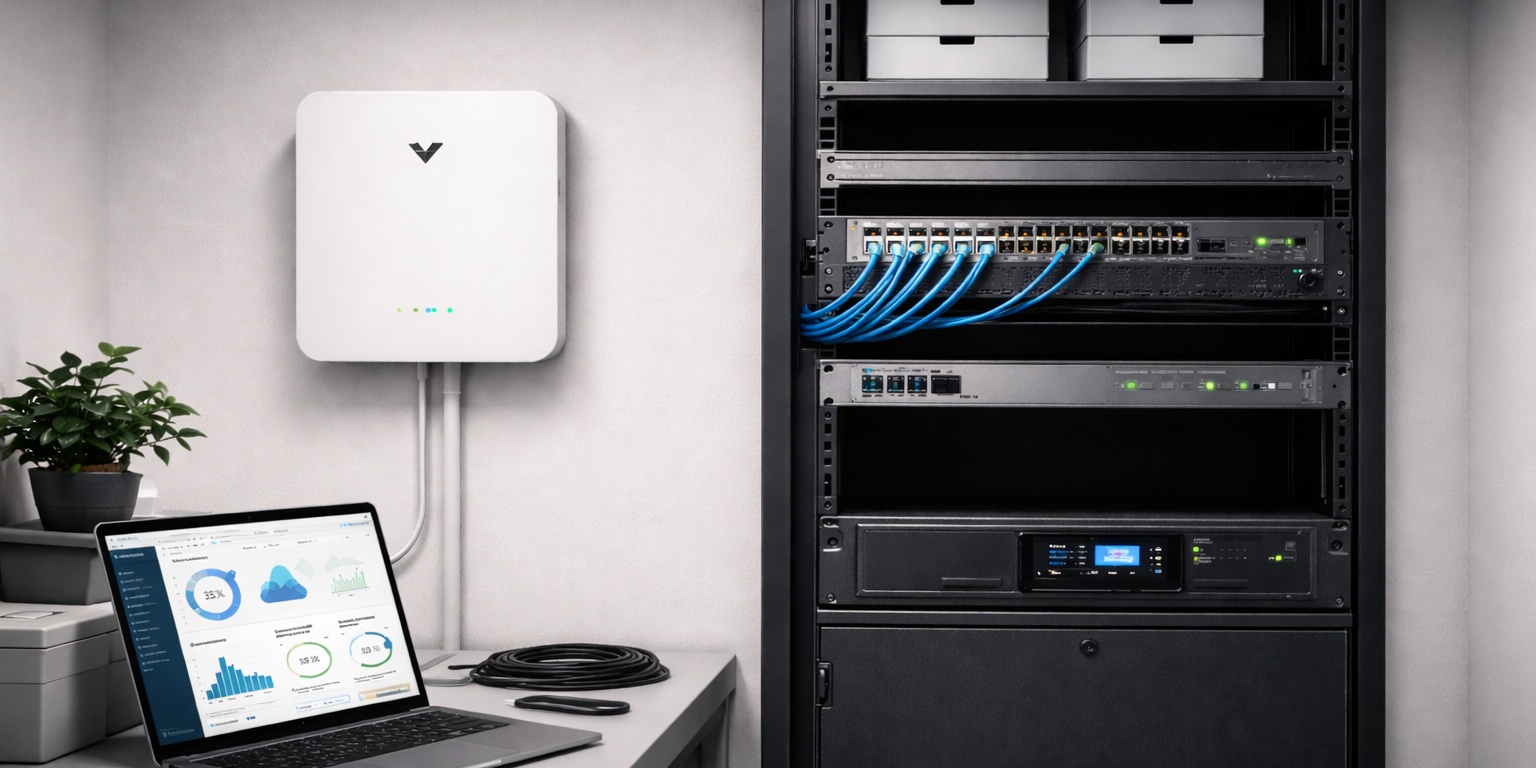
Hybrid cloud video storage combines on-site local storage with automatic cloud backup. Your cameras record and store footage directly on a local appliance at your location — but that footage is also continuously synced and backed up to secure cloud servers.
You get the speed of local storage with the safety of the cloud. If your local device gets stolen, destroyed, or fails, your footage is still intact in the cloud. If your internet goes down, cameras keep recording locally without interruption.
Traditional DVR and NVR systems store footage on-site only. There's no cloud backup. If something happens to that recorder, the footage is gone — often at the exact moment you need it most.
How Hybrid Cloud Works (In Plain English)
Here's what happens when you have a hybrid cloud system like Verkada installed:
- Your cameras capture footage and store it on a local edge appliance
- That footage is encrypted and automatically synced to the cloud in real time
- You access live and recorded footage from any device — phone, tablet, laptop — anywhere in the world
- Your system updates automatically, no technician needed
- Alerts and motion events are analyzed by AI and sent directly to your phone
There's no complicated VPN setup. No port forwarding. No calling your IT guy every time you need to pull footage. You log into a simple dashboard and see everything.
5 Ways Hybrid Cloud Beats Traditional DVR Systems
1. Your Footage Is Safe Even If Equipment Gets Stolen
This is the biggest failure point of DVR systems. A burglar breaks in, steals the DVR recorder, and takes the only copy of the footage with them. It happens constantly. With hybrid cloud storage, the footage is already backed up offsite before the thief even walks out the door.
2. No More Lost Footage From Hard Drive Failures
DVR hard drives fail. It's not a question of if — it's when. Most businesses don't realize their recorder has been failing silently for weeks until they need footage and find nothing there. Hybrid cloud systems monitor their own health and alert you immediately if something needs attention.
3. Remote Access Without the Headaches
Traditional DVR remote access is a nightmare. It requires port forwarding, static IP addresses, and constant troubleshooting. Hybrid cloud systems are built for remote access from day one. Pull up any camera from your phone in seconds, no matter where you are.
4. Automatic Software Updates
DVR firmware gets outdated fast. Most businesses never update it, leaving known security vulnerabilities open for years. Hybrid cloud systems update automatically in the background — just like your phone. You always have the latest features and security patches without doing anything.
5. AI-Powered Search and Alerts
Old DVR systems record everything and make you scrub through hours of footage manually. Hybrid cloud systems like Verkada use AI to analyze footage as it's recorded. You can search for a person wearing a red jacket, filter by motion zones, or get instant alerts when someone enters a restricted area. What used to take hours takes seconds.
How Long Does Hybrid Cloud Store Footage?
Storage retention depends on your system and plan. Most hybrid cloud systems offer flexible retention options:
- 30 days — standard for most small businesses
- 60–90 days — recommended for retail, restaurants, and warehouses
- 1 year or more — required for some regulated industries like cannabis, financial institutions, and healthcare
With a DVR, retention is limited by the size of the hard drive installed. Once it fills up, old footage gets overwritten automatically — often before anyone realizes something happened. Cloud storage scales without you having to buy new hardware.
Is Hybrid Cloud Video Storage Secure?
This is the first question most business owners ask — and it's a fair one. The short answer is yes, hybrid cloud is significantly more secure than a local DVR.
Here's why. DVRs are often connected to the internet with weak default passwords and outdated firmware, making them one of the most commonly hacked devices on a business network. A 2023 report from Bitdefender found that IP cameras and DVRs are among the top targets for botnet attacks and unauthorized access.
Hybrid cloud systems like Verkada use end-to-end encryption, multi-factor authentication, and zero-trust network architecture. Your footage is encrypted in transit and at rest. Access is controlled by role-based permissions — so your store manager can see their location, but not every location in the company.
You can learn more about enterprise-grade cloud security standards at the CISA Cloud Security resource hub.
What Types of Businesses Benefit Most?
Hybrid cloud video storage works for any business with security cameras — but it's especially valuable for:
- Multi-location businesses — manage all locations from one dashboard instead of logging into separate DVR systems
- Retail stores — loss prevention, employee monitoring, and incident documentation
- Restaurants and bars — monitor multiple areas remotely, pull footage for disputes or incidents
- Warehouses and distribution centers — large coverage areas with AI-powered zone alerts
- Medical clinics and pharmacies — HIPAA-compliant access controls and audit logs
- Financial institutions — long-term retention and tamper-evident footage for regulatory compliance
- Schools — district-wide visibility with role-based access for administrators and principals
What About the Cost?
Hybrid cloud systems have a higher upfront cost than a basic DVR setup. That's true. But the comparison isn't really fair when you factor in what you're actually getting.
A cheap DVR system has hidden costs most businesses don't account for:
- Hard drive replacements every 2–3 years
- IT time troubleshooting remote access and firmware issues
- Footage loss incidents — which can cost far more in liability than the equipment itself
- No AI features, no smart alerts, no cloud access
When you add it all up, the total cost of ownership for hybrid cloud is often comparable to a traditional system — with dramatically better protection and capabilities.
Ready to Upgrade Your Camera System?
If your business is still running a DVR or NVR, you're one bad day away from losing critical footage. Hybrid cloud video storage gives you local reliability, cloud safety, and remote access — all in one system that manages itself.
Wired NM installs and configures Verkada hybrid cloud systems for businesses across New Mexico. We handle everything from camera placement to cloud setup so you're protected from day one.