What Is the Worst State in the Country for Business Break-Ins?

Wired
Quick Answer: New Mexico ranks as the worst state in the country for burglary, with 517.9 incidents per 100,000 residents according to the most recent FBI Uniform Crime Reporting data. That rate sits 56% above the national average and includes businesses of every type, from small retail shops to warehouses and medical offices. If your business operates in New Mexico, you are in the highest-risk commercial environment in the United States.
The worst state in the country for business break-ins is New Mexico, and it is not a close call. The FBI's most recent Uniform Crime Reporting data ranks New Mexico first in the nation for burglary rate, ahead of every other state including Washington, Oklahoma, and Arkansas. For business owners in Albuquerque, Santa Fe, Rio Rancho, and the surrounding region, this ranking confirms what many already feel every time they check their property in the morning. The real question is not whether New Mexico has a problem. The question is what business owners can actually do about it.
How Does New Mexico Compare to the Rest of the Country?
The numbers tell a clear story. New Mexico recorded 517.9 burglaries per 100,000 residents in 2023, the highest rate of any state in the country. Washington came in second at 481 per 100,000, followed by Oklahoma, Arkansas, and Nevada. New Hampshire sat at the opposite end with the lowest rate in the nation.
The gap between New Mexico and the national average is significant. Property crime in New Mexico runs about 56% above the national average when you factor in larceny, burglary, and motor vehicle theft together. Albuquerque specifically has ranked in the top five U.S. cities for commercial burglary for years running. These are not anomalies. They are patterns, and patterns predict risk.
One number that most business owners miss: roughly 89% of burglaries go unsolved nationally. Once a break-in happens, the odds of catching the person or recovering property are low. The cost lands almost entirely on the business through stolen inventory, repair bills, insurance claims, and lost operating time. Prevention is not optional in this environment. It is the only reliable strategy.
Why Do Break-In Rates Stay So High Here Year After Year?
New Mexico sits at the top of the list for several reasons that overlap and reinforce each other. Understanding them helps business owners make smarter decisions about where to invest in security.
- Long police response times. New Mexico is geographically large and sparsely populated. Response times in outlying areas stretch long, which creates windows that experienced burglars plan around. Even in Albuquerque, staffing shortages have historically slowed patrol coverage.
- Drug-driven property crime. FBI data and state-level reports consistently link New Mexico's burglary rate to drug dependency, particularly fentanyl and methamphetamine. People stealing to fund a habit are not deterred by the same things as opportunistic thieves.
- Under-resourced law enforcement. Several New Mexico police departments operate below full staffing. Fewer officers means less deterrence and slower case investigations.
- Tourism traffic. Santa Fe and parts of Albuquerque draw heavy seasonal tourist traffic. Historically, high foot traffic areas see higher rates of opportunistic property crime.
- Commercial target density. Business corridors in New Mexico often see multiple businesses hit in a single night. One person, one area, five victims is a common pattern in incident reports.
None of these factors are going away quickly. That is exactly why security strategy for a New Mexico business cannot look like security strategy in a low-risk state. You need more layers, faster detection, and no single points of failure.
Which Business Types Get Hit Most Often?
Commercial burglary in New Mexico follows clear patterns. Knowing which business types get hit most often helps owners prioritize where to put their security resources first.
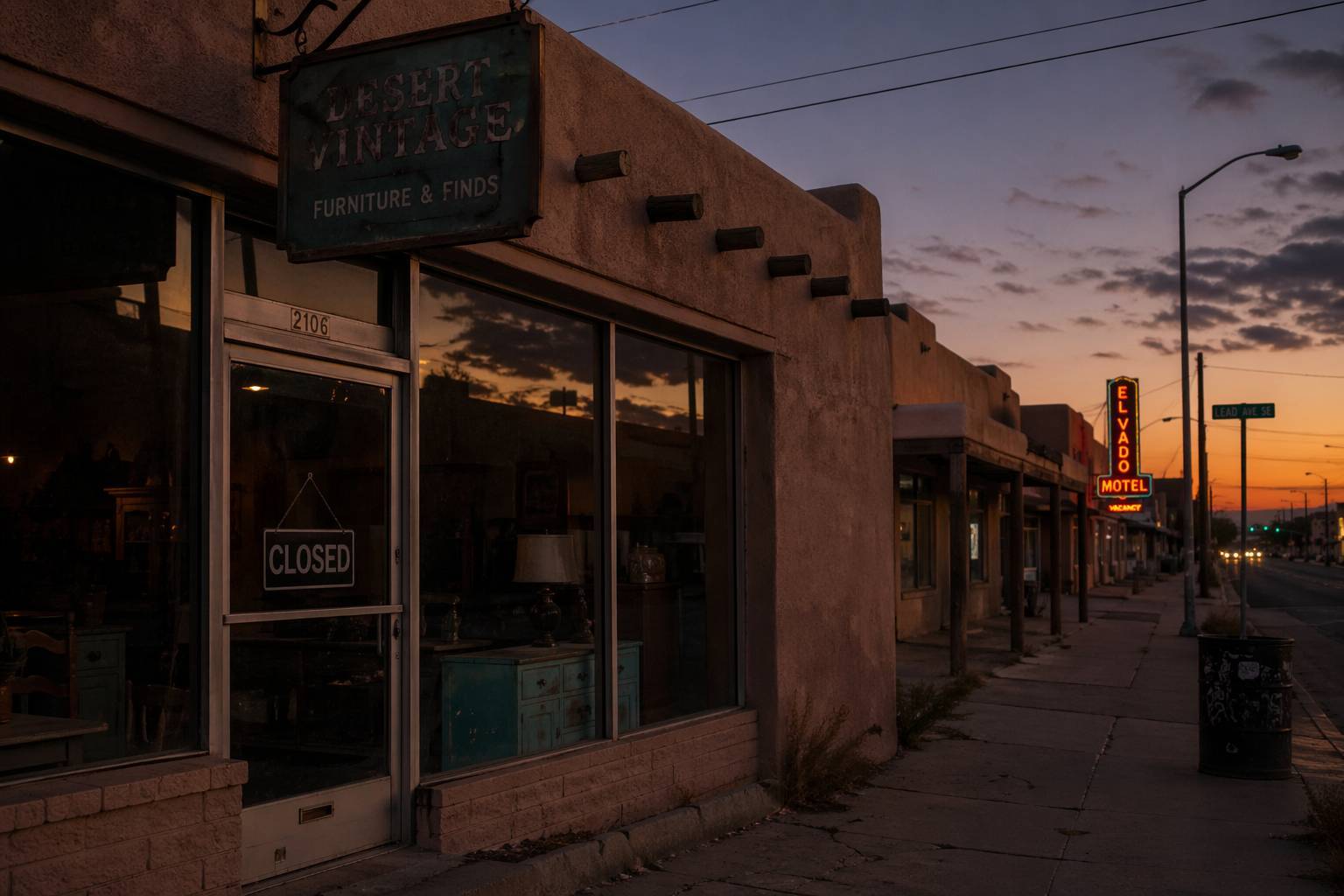
- Small retail along main corridors. Smash-and-grab incidents concentrate on business strips with older storefronts, weak glass, and limited after-hours lighting or visibility.
- Warehouses and distribution sites. Large facilities with thin after-hours staffing are consistent targets for tool and inventory theft.
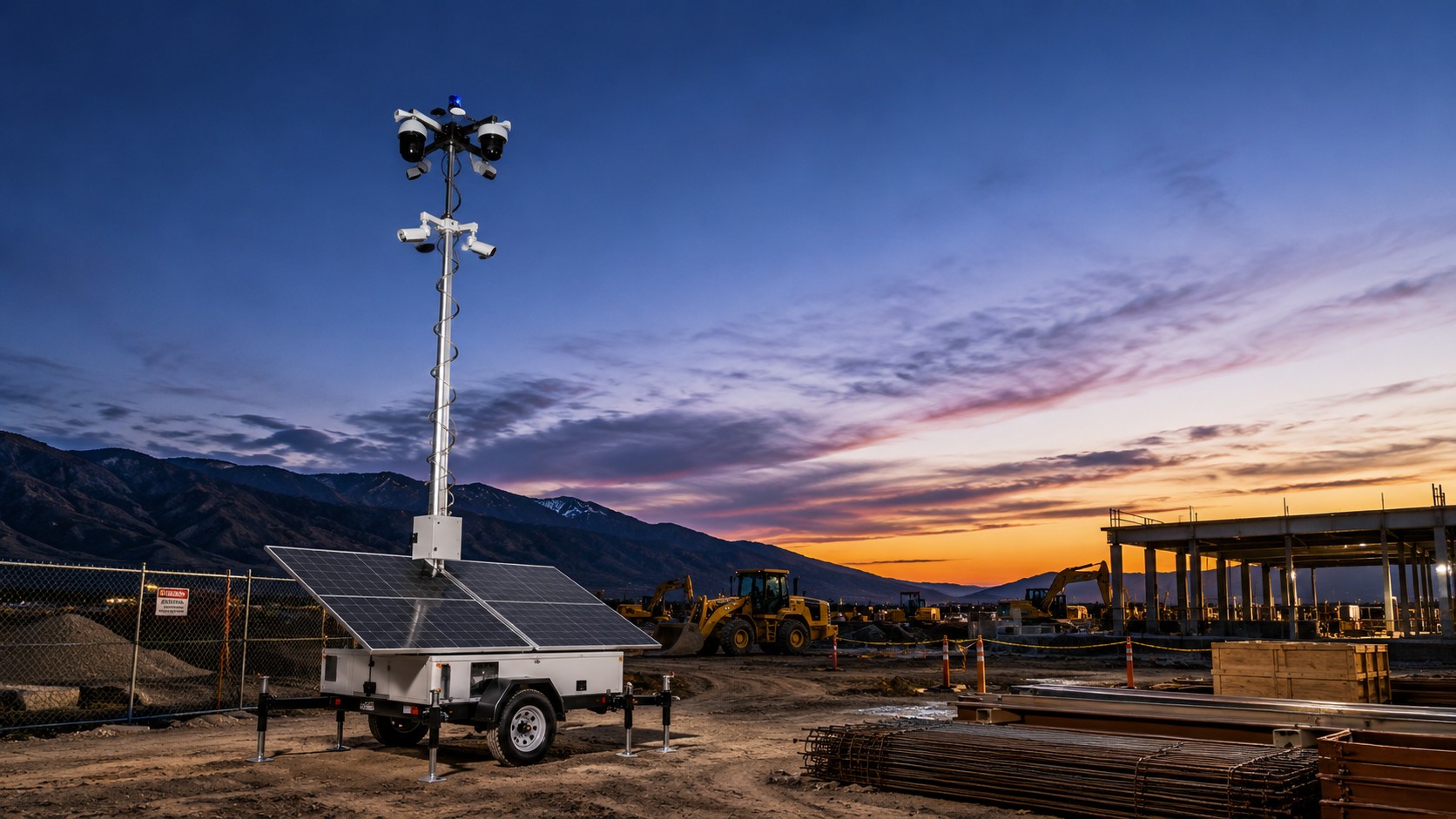
- Construction sites. Copper wire, power tools, and heavy equipment disappear from active job sites across the Albuquerque metro on a near-weekly basis.
- Medical and dental offices. Prescription inventory and controlled substances attract organized, targeted break-ins. These are not random.
- Auto dealerships and repair shops. Catalytic converter theft and vehicle inventory break-ins remain a persistent statewide issue.
If your business falls into one of these categories, the FBI ranking is your operating environment. Wired's commercial security systems for New Mexico businesses are built specifically for these risk profiles, combining camera coverage, alarm monitoring, and access control into one coordinated system.
Does Operating in a High-Burglary State Mean Your Business Will Get Targeted?
No. Being in the worst state for break-ins does not mean every business gets targeted. It means the odds are higher, and the margin for error in your security setup is smaller. The data on deterrence is consistent across decades of research: visible, layered security changes whether a property gets selected as a target in the first place.
Most burglars scan a property before approaching. If the property looks watched, covered, and monitored, many move on. The businesses that get hit most often are the ones that look like the easiest path. Unlocked side doors, dark loading areas, unmonitored entry points, and outdated alarms all signal low resistance.
For a deeper look at how Albuquerque's specific crime patterns shape what local businesses should install and where, read our breakdown of why Albuquerque crime stays high and how businesses respond. The local picture adds important detail beyond the statewide numbers.
What Security Layers Actually Deter Commercial Break-Ins?
The research on commercial burglary deterrence points to the same answers repeatedly. These five layers are what separate businesses that get skipped from the ones that get hit.
- Visible cameras at every entry point. Camera presence alone is one of the most reliable deterrents. Research from the University of North Carolina found that 60% of burglars would choose a different target if they spotted cameras or alarms. Placement and visibility matter as much as quantity.
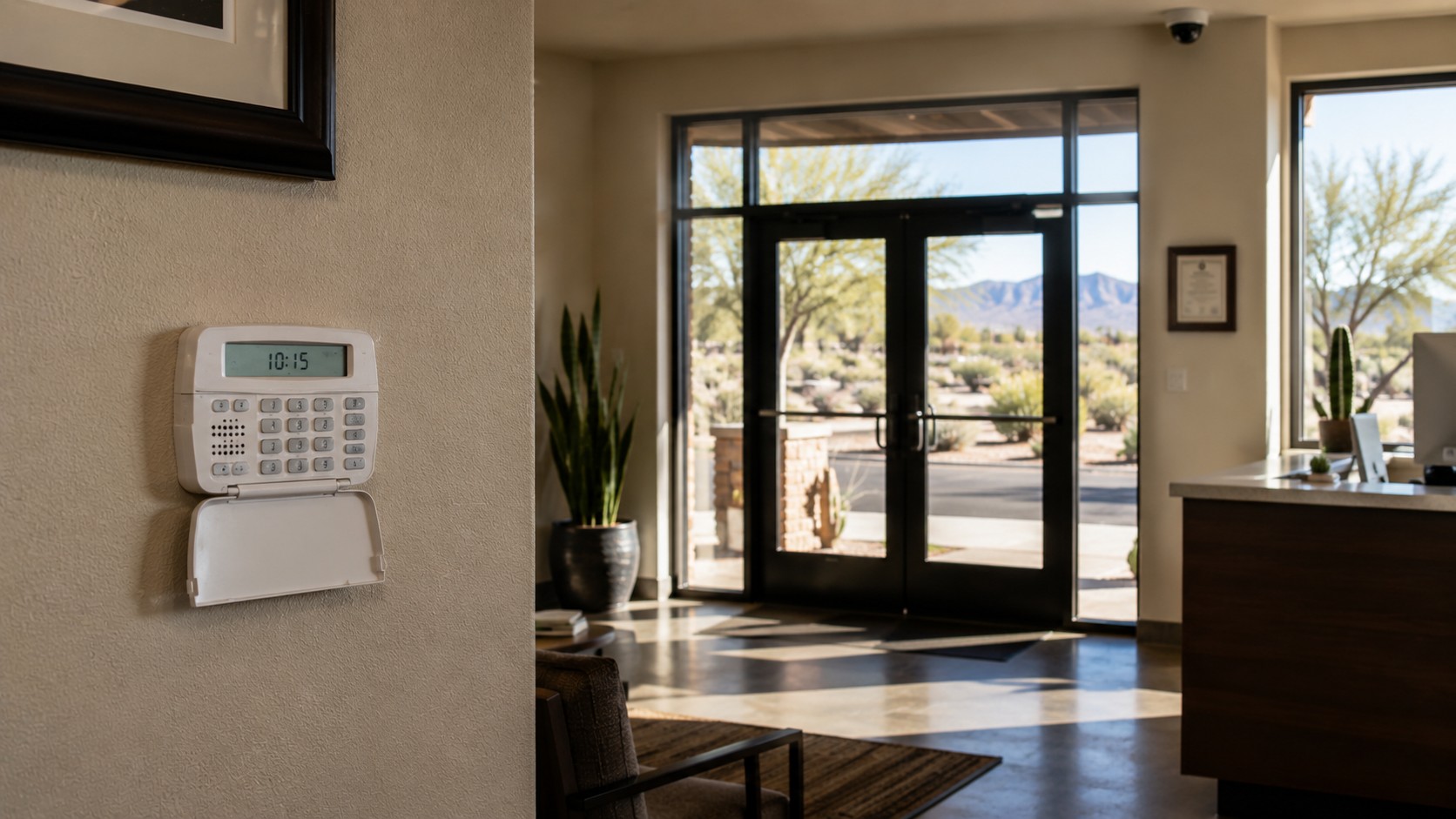
- Monitored alarm systems. A loud siren with no monitoring is just a countdown clock. A monitored system puts a trained operator responding in seconds, not minutes, and gives law enforcement a verified signal instead of an unconfirmed alarm.
- Controlled access points. Keycard access, mobile credentials, and time-based entry restrictions reduce unauthorized entry and create logged records of every person who moves through your building.
- Lighting and clear sightlines. Dark loading docks, shadowed alleyways, and blocked windows are the easiest targets on any commercial property. Motion-activated lighting removes the cover of darkness that most break-ins depend on.
- Cloud-backed footage storage. If a burglar finds your recorder on-site, your evidence is gone. Cloud-stored footage survives the break-in and gives you usable evidence for insurance claims and police reports.
For independent statewide data to review alongside your security planning, the full New Mexico crime summary is available at USAFacts' New Mexico crime data, which the federal government updates annually from FBI reporting.
What Steps Should Business Owners Take This Quarter?
Operating in the country's highest-risk state means your security setup needs to be current, not just present. Here are five things worth doing this quarter, each of which takes less than an afternoon.
- Walk your property after dark and note every blind corner, unlit entry, and door without a camera on it. If you would not feel confident on a security audit, a burglar will find the same gaps first.
- Test your alarm end-to-end. If you cannot remember the last time this happened, it has been too long. A system that was installed five years ago may not be functioning the way it was designed to.
- Confirm your recorder is physically secured. If it sits in an accessible closet or storage room, anyone who gets inside can take it with them.
- Pull yesterday's footage from your phone. If you cannot do it, your remote access is not set up correctly. Cloud-backed systems should give you live and recorded access from any device.
- Ask your alarm provider exactly what happens when a signal comes in at 2 AM. If the answer is not specific about verification, dispatch, and response time, push for a better answer or a better provider.
What the Worst State for Break-Ins Means for Your Business
New Mexico leads the country in burglary rate, and that fact is unlikely to change in the near term. What can change is how prepared individual businesses are before something goes wrong. Every major win in commercial security, including deterrence, fast response, and cloud-backed evidence, comes from choices made before an incident, not after one.
Wired designs and installs commercial security systems for businesses across Albuquerque, Santa Fe, Rio Rancho, and surrounding New Mexico communities. The team has worked here since 2005 and knows the local crime patterns, the local building types, and the specific vulnerabilities that come with operating in this state. This is not a national call center. It is a local team with 25-plus certified technicians who show up on-site.
Want to know exactly where your property is exposed right now? Contact Wired for a free on-site walkthrough. The assessment shows you the specific openings a burglar would look for first, and what it takes to close them before someone else finds them.