Can AI Actually Tell a Customer From a Shoplifter?

Wired
Sort of — and that "sort of" is the whole story behind modern AI shoplifting detection. The technology is real, and it is better than most people think. But it does not read minds, it does not identify thieves by appearance, and it is not the magic-box solution some vendors pitch. What AI actually does well is flag specific patterns of behavior — concealment movements, repeat loitering, hand gestures near product areas — and alert staff in real time. What it does not do is replace good store design, trained employees, or common sense loss prevention. This is the honest picture of where AI shoplifting detection stands right now in 2026, what it catches, what it misses, and what retailers should actually expect before they buy in.
What AI Shoplifting Detection Is Actually Looking At
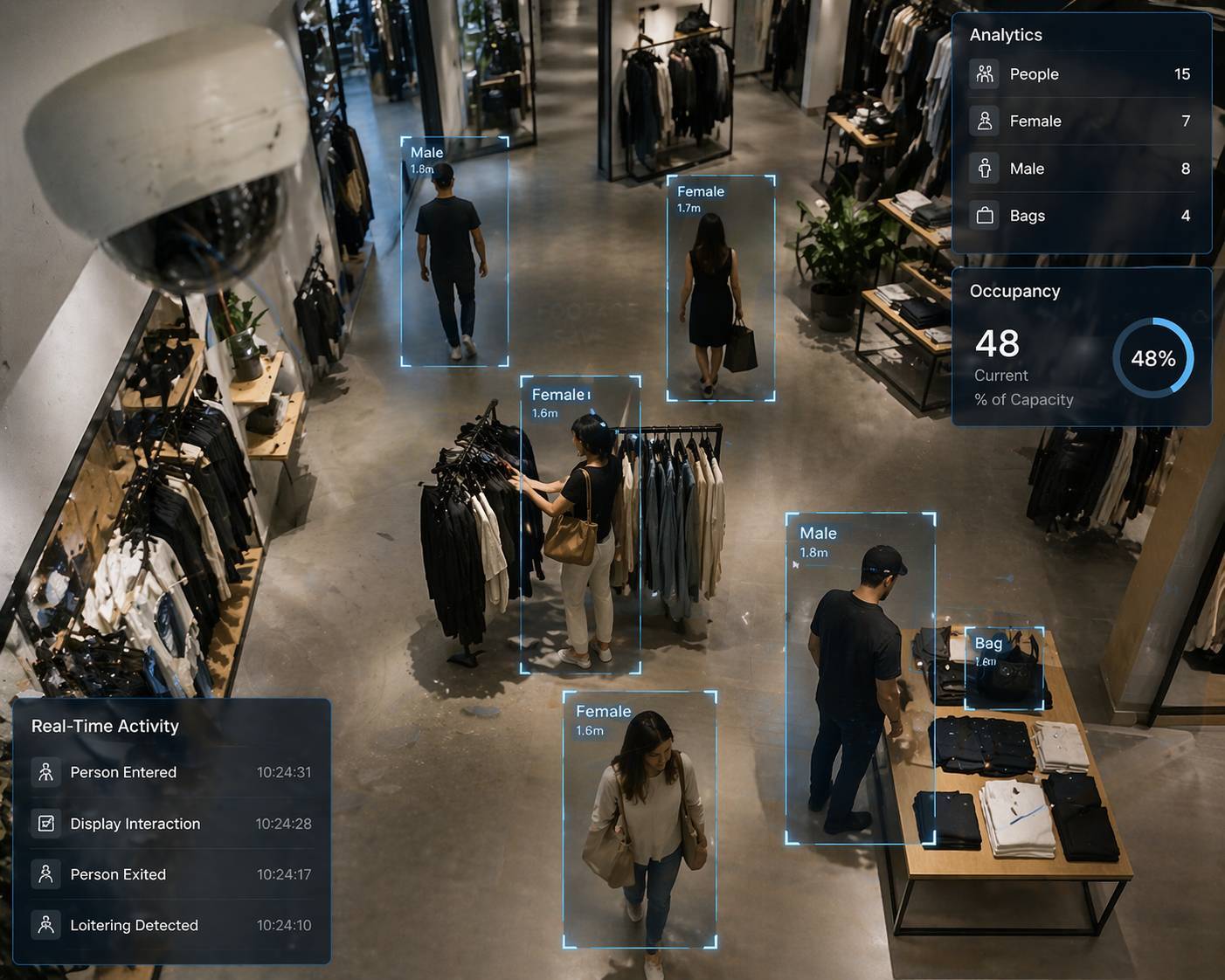
First, the confusion that matters most: AI shoplifting detection does not work by identifying "bad people." It works by identifying behavior patterns that strongly correlate with theft. That is a big distinction, legally and ethically.
Here is what the better systems actually look for:
- Concealment movements. Placing items into a bag, jacket, or pocket — especially without pausing near a register.
- Repeat product interactions. Visiting the same shelf or product area multiple times, often hesitating before moving on.
- Loitering without purchase intent. Spending extended time in a section without handling items the way shoppers normally do.
- Rapid hand movement near high-value items. Quick grabs at electronics, cosmetics, razors, or alcohol tend to be signature theft patterns.
- Exit anomalies. Leaving without passing a register when the behavior before exit matches concealment patterns.
None of that involves facial recognition, race, age, or appearance. The best AI shoplifting detection systems specifically avoid those inputs — both because they trigger false positives and because they create massive legal exposure. A good system looks at hands and motion, not faces.
What AI Actually Catches — And Where It Falls Short
There is a big gap between marketing claims and real-world performance. Honest review of the field shows both.
What current AI shoplifting detection genuinely does well:
- Real-time alerts to store staff. Instead of reviewing footage the next day, loss prevention gets notified within seconds of a suspicious pattern.
- Catching organized repeat offenders. Pattern recognition across visits is far more consistent than human memory, especially across shift changes.
- Spotting missed scans at self-checkout. Systems can flag items that get through without being scanned — one of the fastest-growing sources of loss.
- Reducing footage review time. When an incident does occur, AI can locate the relevant clip in seconds instead of hours.
- Acting as a visible deterrent. When signage makes it clear that AI is monitoring, studies suggest some would-be thieves move on to softer targets.
Where the technology still struggles:
- False positives are still common. Even leading gesture-recognition systems run alert-relevance rates around 85% — meaning roughly 1 in 7 alerts is a false alarm. That adds up fast in a busy store.
- Context-blind errors. A shopper comparing two meat packages or reshelving a mispicked item can trigger alerts. Some systems confuse honest behavior with concealment.
- Bypass techniques. Booster bags (foil-lined to block sensors), distraction teams, and organized retail crime crews have ways around most AI systems.
- Reliance on good camera coverage. AI cannot see what the cameras miss. Poor placement, blind spots, and low-resolution feeds tank performance.
- Privacy and bias concerns. Systems built on facial recognition or demographic inputs have triggered lawsuits and regulatory action. Gesture-only systems sidestep most of that, but not all.
Walmart famously piloted an AI system called Everseen that was widely nicknamed "NeverSeen" by frustrated staff because of its false-alert volume. The lesson there was not that AI shoplifting detection does not work — it was that deploying it without the right people, protocols, and camera infrastructure produces noise instead of results.
The Size of the Problem AI Is Trying to Solve
Retail shrink is not a minor line item. According to the National Retail Federation, shrink hit $112 billion in U.S. retail — and shoplifting incidents surged 93% between 2019 and 2023. On top of that, 84% of retailers report an increase in violence during shoplifting incidents over the same period.
Here is what that means for any business with a storefront:
- Organized retail crime is no longer the exception. It is a coordinated, funded category of business loss.
- Traditional CCTV catches theft after the fact. That was fine in 1998. It is not enough now.
- Staff safety has become part of the loss prevention conversation. Confrontation is up, and stores are being forced to rethink how and whether to engage a suspected thief in real time.
AI is not the only answer to this — but it is one of the few tools that actually changes the math. Well-placed cameras plus AI plus a trained response protocol can reduce shrink without putting staff in harm's way.
What It Takes to Make AI Shoplifting Detection Actually Work
The honest truth about AI in retail: the software is only as good as the system around it. Drop a black-box AI tool onto a bad camera setup and you get expensive noise. Here is what actually moves the needle.
- Good cameras in the right places. AI cannot analyze what the camera cannot see. High-risk zones like entrances, high-value aisles, and self-checkout lanes need dedicated coverage with enough resolution for gesture analysis.
- Modern AI-capable platforms. Older analog systems simply do not have the compute or integration to run AI analytics. This often means upgrading to IP cameras with edge computing or a cloud platform.
- Clear response protocols. An alert that nobody responds to is wasted. Staff need a trained, safe procedure for what to do when AI flags something.
- Integration with the rest of the security stack. AI alerts work best when tied into access control, alarm monitoring, and after-hours response — not standing alone on a manager's phone.
- Regular tuning. Every store is different. False positive rates drop significantly once the system learns the normal rhythms of that specific location.
This is where the choice of installer matters more than the choice of AI vendor. Wired's commercial security camera installation services are designed for AI-ready platforms from day one — cameras, cabling, and infrastructure built so AI analytics actually perform instead of stalling on low-resolution feeds or patchwork coverage.
AI Plus the Rest of Your Security Stack
Shoplifting detection is one piece of a bigger picture. The retailers getting real results from AI are usually the ones who have already thought through the rest of the stack:
- Access control for back-of-house. Employee theft accounts for a huge share of retail shrink. Access control systems that track who entered stockrooms and when shut down a big source of internal loss.
- After-hours monitoring. A break-in at 2am is a different problem than daytime shoplifting. Monitored alarm services handle the overnight risk when nobody is watching the AI alerts.
- Visible deterrence. Cameras that can be seen from outside the store cut opportunistic theft before it starts. AI helps, but visibility still matters.
The stores running the full stack — smart cameras, AI analytics, access control, monitored alarms, and trained staff — are the ones actually closing the gap. The ones relying on AI alone are the ones ending up in the "NeverSeen" club.
Will AI Get Better? Probably. Should You Wait? Probably Not.
AI shoplifting detection in 2026 is not perfect. It will be noticeably better in 2028. But the retailers dragging their feet are the ones watching shrink climb while competitors lock it down. The real question is not whether the technology is ready. It is whether your store is.
Most small and mid-size retail businesses do not need a custom AI deployment. They need good cameras, a modern platform that can run analytics, a real monitoring relationship, and a partner who actually shows up when something breaks.
Is Your Store Losing More to Shrink Than You Realize?
Most retailers find out they have a shrink problem twice: once when the inventory count comes in, and again when they realize how much got through their cameras without anyone noticing. AI shoplifting detection is not a fix for everything — but it is one of the few tools that actually turns passive cameras into active protection.
Wired designs and installs commercial security systems for retail businesses across Albuquerque, Santa Fe, Rio Rancho, and the surrounding region. Our Verkada camera systems are built from the ground up to run AI analytics, with cloud-backed footage, smart alerts, and one dashboard your managers can actually use. We handle design, install, training, and ongoing support — no national call center, no rip-and-replace scams.
Want to see where your store is bleeding money right now? Contact Wired today for a free on-site walkthrough. We will show you exactly where your cameras have gaps, where AI could actually help, and what it would take to stop leaving money on the aisle.