What Kinds of Businesses Need Weapons Detection Systems?

Wired
Quick Answer: Businesses that need weapons detection usually have big crowds, entrances open to the public, or a real risk of weapons coming inside. That list includes stadiums, event venues, schools, hospitals, churches, casinos, courthouses, and high-value retail. The right tool depends on how people enter your building, so a stadium and a small clinic often need very different setups.
The businesses that need weapons detection most share three traits: lots of visitors, doors open to the public, and a real chance that someone brings a weapon inside. Stadiums, schools, hospitals, and houses of worship top the list. Smaller sites like clinics and jewelry stores can benefit too, but they usually need a lighter setup. More New Mexico sites now use this technology every year. Rio Rancho Public Schools runs Evolv scanners at almost every middle and high school in the city. This guide covers which businesses need weapons detection, which tools fit each one, and what to ask before you buy.
Which Businesses Need Weapons Detection the Most?
Businesses with large crowds and open doors need weapons detection the most. Airports, courthouses, government buildings, schools, stadiums, and industrial sites have used these systems for years. Now casinos, hospitals, jewelry stores, and houses of worship use them more often too. Here is why each one makes the list:
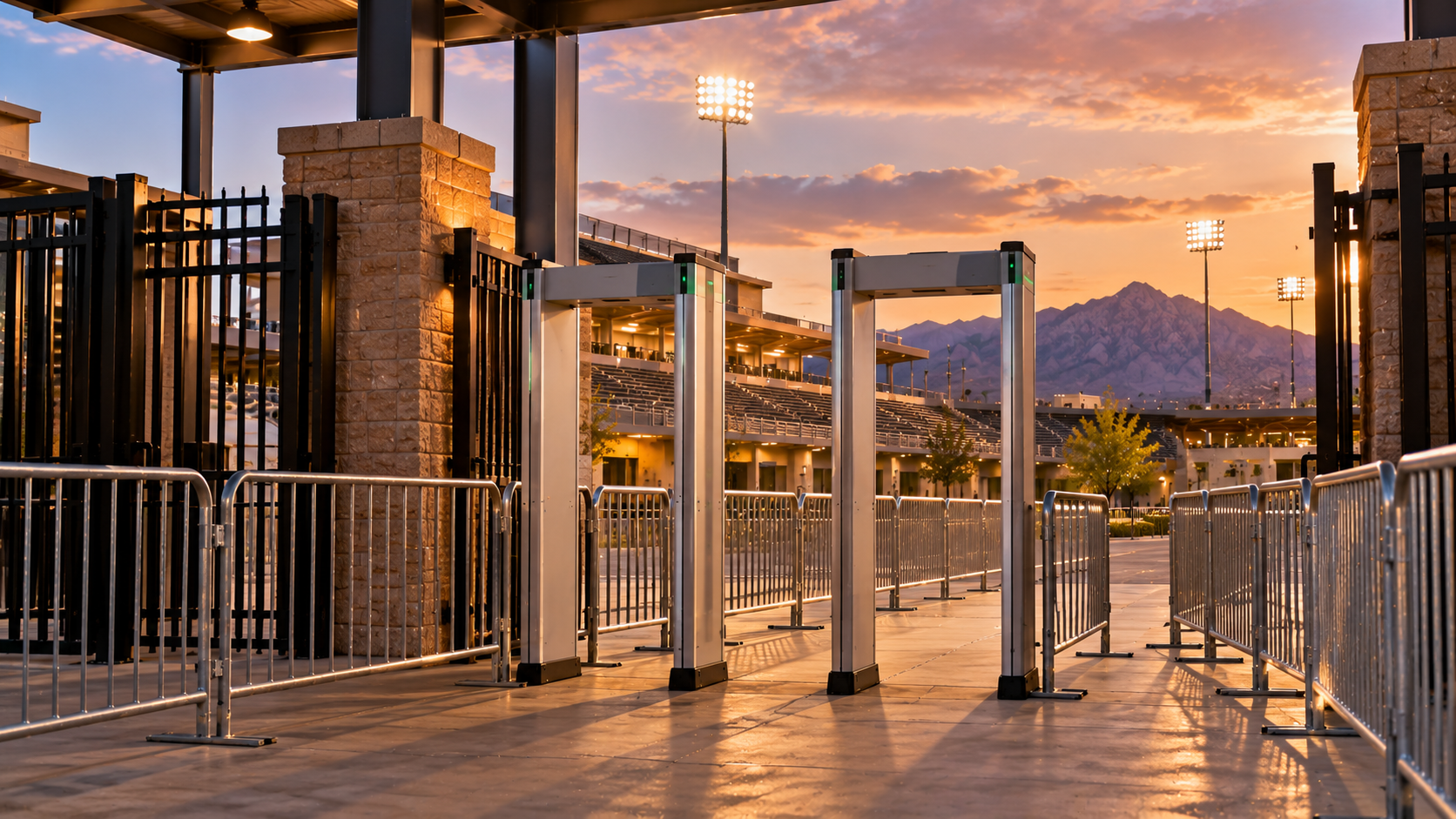
- Stadiums, arenas, and event venues. Thousands of people arrive at the same time, so screening has to move fast. Weapons detection for stadiums and venues in New Mexico usually means walk-through scanners at every gate.
- Schools and campuses. Students walk in every morning, and games and assemblies bring in big crowds at night. New Mexico now sets aside state money for this. Our guide to school weapons detection grants in New Mexico explains the funding.
- Hospitals and clinics. Emergency rooms stay open all night and serve people during the hardest moments of their lives.
- Churches and houses of worship. These buildings welcome the public, and community groups often use the space during the week.
- Courthouses and government buildings. The public walks in all day, and many visitors come for tense reasons like court dates.
- Casinos. Casinos stay open long hours, and large ones can have 20 or more doors at a single main entrance.
- Jewelry stores, banks, and high-value retail. Fewer people walk in, but each robbery costs a lot. These sites often build screening into the front vestibule and add stronger glass.
Are Weapons Detection Systems the Same as Metal Detectors?
No, weapons detection systems and metal detectors work differently. A basic metal detector beeps at almost any metal, so people have to empty their pockets of keys and phones. Newer weapons detection systems use sensors and AI to tell a gun or large knife apart from everyday items. That lets people walk through at a normal pace. These systems still alarm on some harmless objects, though. Rio Rancho schools started phasing out large zippered binders because the binders set off the scanners.
Which Weapons Detection Tools Fit Which Businesses?
The right tool depends on how people enter your building and how many arrive at once. WiredNM installs three main options for businesses that need weapons detection across New Mexico.
Evolv for Busy Entrances
Evolv works best where crowds arrive at the same time. This walk-through scanner screens up to 4,000 people per hour, and people keep their phones and keys in their pockets. Stadiums, schools, hospitals, and courthouses use it at main gates. For concealed weapon detection in New Mexico, walk-through screening like Evolv is the main option because it looks for weapons people carry out of sight. See how our team sets up Evolv weapons detection, or read how Evolv Express works for the technical side.
ZeroEyes for Sites With Good Cameras
ZeroEyes adds AI gun detection to the security cameras you already own. When someone pulls out a gun on camera, ZeroEyes spots it and sends an alert within seconds. It fits clinics, offices, retail stores, and churches that don't want a screening line at the door. ZeroEyes looks for guns people show, so it can't catch a gun that stays hidden. Learn more about ZeroEyes gun detection.
FSJ Tactical Ballistics for Extra Protection
FSJ Tactical panels and window film add protection after a threat shows up. Bullet-resistant panels shield front desks and reception areas, and the film helps existing windows resist bullets and forced entry. Banks, schools, and lobbies often pair FSJ Tactical Ballistics with cameras or screening.
Do Churches and Hospitals Need Weapons Detection?
Many churches and hospitals benefit from weapons detection, but each one needs a different setup.
Hospitals serve patients and families at the lowest point in their lives, and some arrive angry or desperate. Screening at the emergency room can't slow down urgent care, so security experts flag any primary screening that takes more than 10 to 15 seconds per person. Hospitals also need room for wheelchairs, walkers, and people with medical implants. Rules from groups like the Joint Commission also shape hospital security plans.
Churches face a different challenge. Members often want a warm, open entrance, and outside groups use the building during the week. A camera-based tool like ZeroEyes can watch for guns without a checkpoint at the door. Some churches bring in walk-through screening only for big events, like high-profile weddings. Federal and state grant programs also exist to help houses of worship pay for security.
Which Businesses Probably Don't Need Weapons Detection?
Small offices with locked doors and badge-only entry often don't need weapons detection. If only employees and invited guests walk in, access control systems and cameras already handle much of the risk. A walk-through scanner also needs people to run it. For larger sites, best practice calls for three staff members at each screening point: one to oversee, one for primary screening, and one for follow-up checks. If you can't staff a lane, a camera-based option or stronger access control may fit your business better.
What Should You Ask Before Investing in Weapons Detection?
Start by asking how a weapons detection system will work with your real building, staff, and visitors. Security Info Watch's planning checklist for facilities covers these questions in depth:
- How many public entrances do you have? Every open door needs screening or a plan to close it. Building layout matters too. Rio Rancho Public Schools held off at Rio Rancho High School because the building's layout didn't work for the scanners.
- How many people arrive at your busiest time? The system has to keep up with your rush, or lines will form outside.
- Who will run the screening point? Plan for breaks, meals, and every hour you stay open.
- What happens after an alert? You need a private spot nearby for a second check.
- Can the system handle wheelchairs, walkers, and medical implants? Visitors with mobility needs may need a separate check.
- Will your signs ban guns? Experts warn that these signs may tell an attacker that staff and visitors don't carry.
- What do New Mexico laws say about concealed carry on your property? Check state and local rules before you set your screening policy.
A good installer helps you answer these questions before you sign anything. Weapons detection works best as one layer of security, alongside cameras, access control, and a clear response plan.
Find Out If Your Business Needs Weapons Detection
WiredNM helps New Mexico businesses pick the right tools for their building, from Albuquerque to Santa Fe. Our team installs Evolv, ZeroEyes, and FSJ Tactical systems and connects them with your cameras and access control. Contact WiredNM for a free assessment and a plan built around how people actually enter your building.