What Causes Most Fires in Commercial Buildings?

Wired
Quick Answer: Cooking is the leading cause of fires in commercial buildings, followed by intentionally set fires and careless mistakes, according to the U.S. Fire Administration. Electrical problems, heating equipment, and open flames round out the list. Careless and electrical fires cause the biggest dollar losses, and early detection keeps a small fire from turning into a total loss.
The common causes of commercial fires are cooking, intentionally set fires, careless mistakes, electrical malfunctions, heating equipment, and open flames. Cooking has led the list every year from 2014 to 2023, according to the U.S. Fire Administration (USFA). But the fastest-growing cause tells a different story: intentionally set fires in nonresidential buildings rose 116% over that same decade. Knowing which fires start most often, which ones cost the most, and how fast they spread helps you protect your building, your staff, and your business.
What Is the Most Common Cause of Fires in Commercial Buildings?
Cooking is the most common cause of fires in commercial buildings. In 2023, cooking started an estimated 33,300 nonresidential building fires across the country, more than double any other cause.
That number includes restaurants, but it also covers break rooms, cafeterias, hotels, schools, and healthcare kitchens. Any building with a stove, a microwave, or a coffee maker carries some cooking fire risk.
The good news is that most cooking fires stay small. In USFA's 2017 to 2019 report, 95% of nonresidential cooking fires were small, confined fires. Cooking starts the most fires, but other causes do far more damage.
What Are the Other Common Causes of Commercial Fires?
After cooking, the other common causes of commercial fires are intentional fires, careless mistakes, electrical malfunctions, heating equipment, and open flames. Here is how many nonresidential building fires each one started in 2023:
- Cooking: 33,300 fires
- Intentional: 14,300 fires
- Other unintentional or careless: 13,800 fires
- Electrical malfunction: 7,400 fires
- Heating: 6,500 fires
- Open flame: 5,900 fires
Intentional Fires
Intentional fires hold the second spot, and they grew faster than any other leading cause over the past decade. Albuquerque Fire Rescue has investigated commercial fires in the metro as possible arson, including one that started on the outside of a building in northwest Albuquerque.
Careless Mistakes
Careless fires come from everyday slip-ups. A cigarette tossed near trash, a space heater left on near boxes, or oily rags stuffed in a bin can all start one. USFA reported a 49% increase in these fires from 2014 to 2023.
Electrical Malfunctions
Electrical fires start in wiring, panels, outlets, extension cords, and lighting. Watch for outdated wiring and overloaded circuits, especially in older buildings. In one recent Albuquerque case, investigators traced a commercial building fire near Sixth Street and Menaul to an electrical issue.
Heating Equipment and Open Flames
Furnaces, boilers, and portable heaters can start fires when they sit too close to stored goods or go too long without service. Open flames from welding, torches, and candles round out the list.
Which Commercial Fires Cause the Most Damage?
Careless fires cause the most damage in commercial buildings. In 2023, careless fires led to about $881 million in nonresidential losses, followed by electrical malfunctions at about $354 million and intentional fires at about $349 million. Careless fires held the top spot for dollar loss in 9 of the last 10 years.
Notice what's missing from the top of that list. Cooking starts the most fires, but those fires usually stay small. The costly fires are the ones that start quietly in a storage room, a wall, or an electrical panel and grow before anyone notices.
When Do Most Commercial Fires Happen?
Most commercial fires happen in the afternoon and early evening. USFA's 2017 to 2019 report found that nonresidential building fires occurred most often from 2 to 7 p.m., when buildings are busy and kitchens and equipment are running.
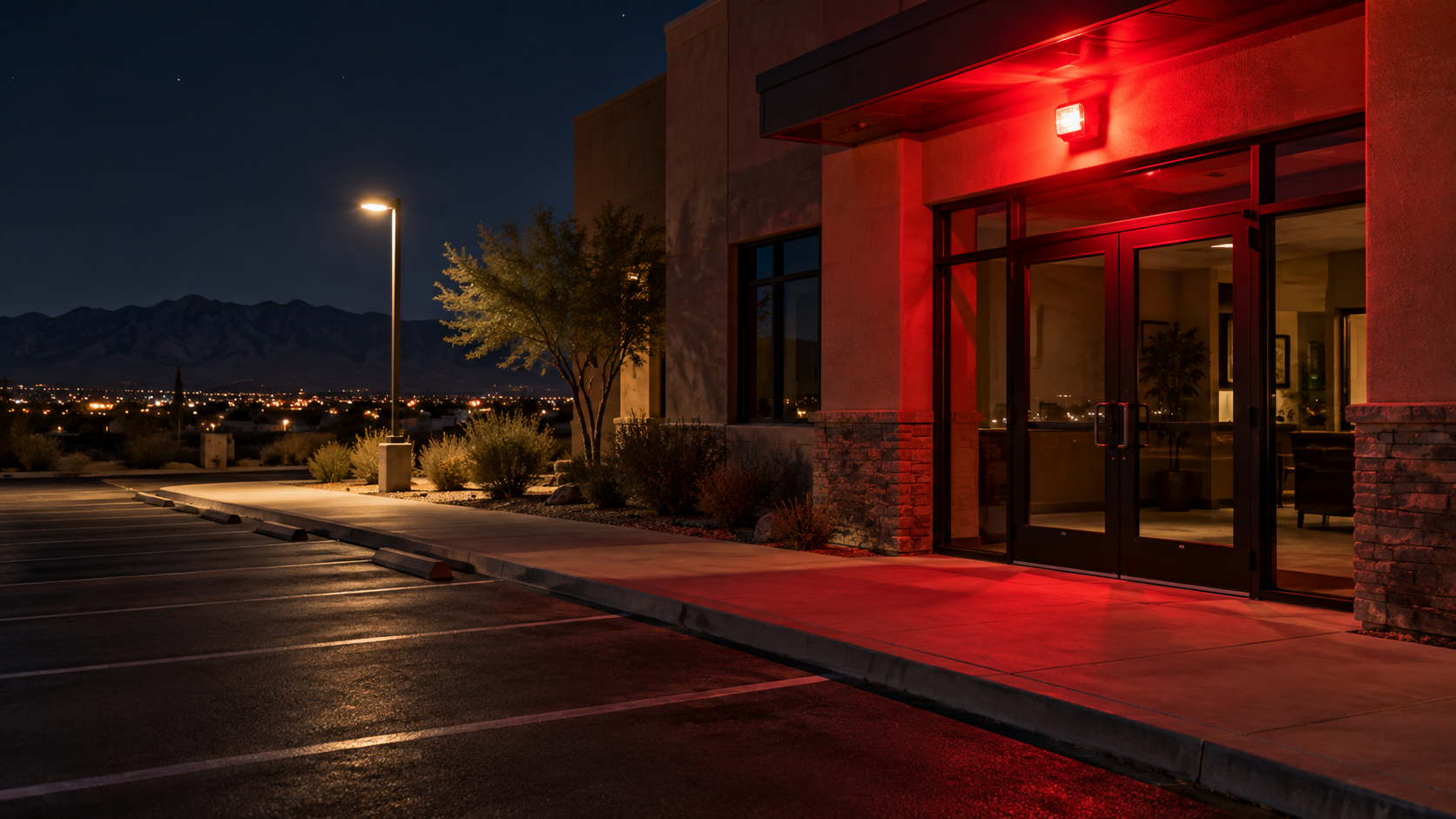
Overnight fires happen less often, but they burn with no one around to spot them. Albuquerque has seen several examples. A food mart fire broke out just after 2 a.m., a paint store fire started around 3:35 a.m., and a downtown warehouse caught fire around 4 a.m. When a building sits empty, a fire alarm system and monitoring are the only things watching.
How Fast Does a Fire Spread in a Commercial Building?
A fire in a commercial building often spreads beyond the room where it started, especially when no one catches it early. In USFA's 2017 to 2019 report, 58% of larger nonresidential building fires spread beyond the room where they started.
Missing detection makes the problem worse. An earlier USFA report covering 2014 to 2016 found that smoke alarms were not present in 52% of the larger fires in occupied nonresidential buildings. Without detection, a fire can grow from one room to a whole building before anyone calls for help.
These fires carry a heavy price. Nonresidential buildings accounted for 20% of the total dollar loss from all U.S. fires in the 2017 to 2019 report.
How Can Businesses Reduce the Risk of Fire?
Businesses can reduce the risk of fire by targeting the most common causes, keeping equipment in good shape, and installing detection that catches a fire early. Start with these steps:
- Keep cooking areas clean. Clean grease from hoods, filters, and surfaces on a regular schedule, and never leave cooking unattended, even in a break room.
- Clear out clutter and trash. Empty trash daily, keep storage away from heaters and panels, and store oily rags in a covered metal container.
- Protect the outside of your building. Light up back doors and dumpster areas, keep combustibles away from exterior walls, and lock trash enclosures to discourage arson.
- Let a licensed electrician check your wiring. Replace damaged cords, stop daisy-chaining power strips, and keep panels clear and accessible.
- Service heating equipment. Schedule furnace and boiler maintenance, and keep space heaters away from boxes, paper, and fabric.
- Install the right detection. Commercial fire alarm systems in Albuquerque detect smoke and heat early and alert everyone in the building. Our guide to addressable vs. conventional fire alarms explains which type fits your building.
- Monitor after hours. A monitored system sends a signal for help even when your building sits empty overnight. Learn more about alarm monitoring for Albuquerque businesses.
- Stay up to code. Regular inspections keep your fire alarm system working and your building compliant. Read about the common fire alarm code violations in Albuquerque so you can avoid them.
For more federal data on each cause, visit the U.S. Fire Administration's nonresidential fire causes page.
Protect Your Building From the Common Causes of Commercial Fires
You can't control every risk, but you can control how fast you find a fire. WiredNM installs and monitors fire alarm systems for businesses across Albuquerque and New Mexico. Whether you need a new system, an upgrade, or monitoring for after-hours coverage, contact WiredNM to talk through your building's needs.