Commercial Security Systems in Santa Fe: A Business Owner's Guide

Wired
Commercial security systems in Santa Fe need to do three things well: watch the right spots, let the right people in, and respond fast when something goes wrong. That sounds simple, but most Santa Fe business owners walk into their first install with one or two of those covered and the third left to chance. A modern commercial system ties cameras, access control, alarm monitoring, and sometimes fire alarms into one platform your managers can actually run — not five disconnected pieces that only the technician understands. This guide walks through what every Santa Fe business should know before installing, upgrading, or auditing a commercial security system in 2026.
What Makes Commercial Security Systems in Santa Fe Different
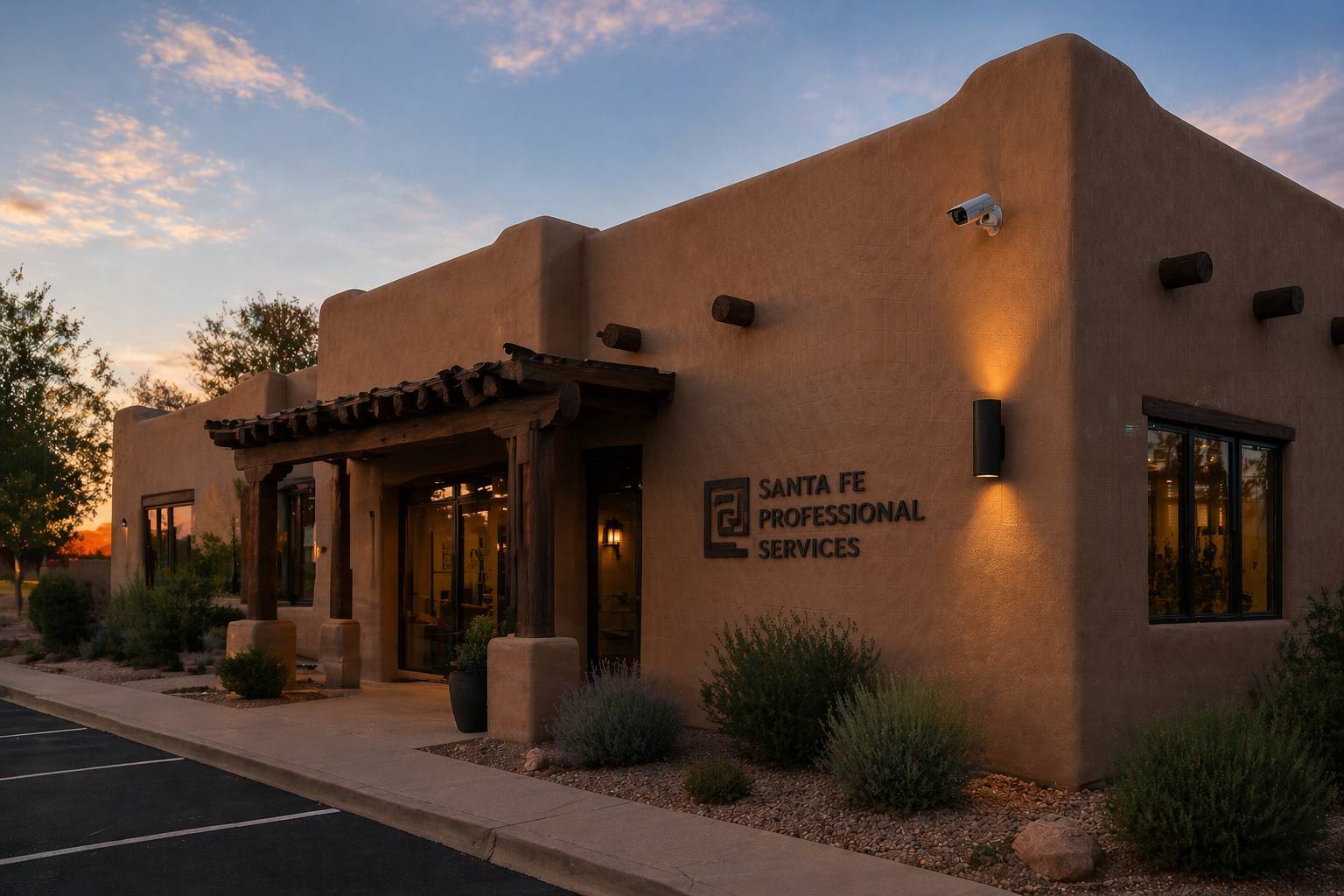
Santa Fe is not Albuquerque. Or Denver. Or Phoenix. The mix of historic buildings, tourist traffic, satellite-city response times, and a heavy mix of small independent businesses creates a security landscape with its own rules.
Here is what that actually means for your system:
- Historic and adobe buildings. Many Santa Fe properties cannot be modified like a modern commercial space. Cabling routes, mounting options, and exterior camera placement all need to respect the building.
- Seasonal tourist traffic. Retail, hospitality, and restaurant businesses see massive swings in foot traffic. A system calibrated for January is the wrong system for July.
- High property crime rate. New Mexico leads the country in burglary rate according to the most recent FBI data. Santa Fe sees property crime at rates well above national averages, particularly opportunistic theft targeting vehicles, storefronts, and vacation rental properties.
- Response time variation. Depending on where you are inside the city, police response can range widely. That changes how much your system should lean on on-site deterrence vs. remote monitoring.
- Harsh environment. High altitude, UV exposure, monsoon humidity, and wide daily temperature swings wear hardware faster than manufacturer specs suggest.
These are not deal-breakers. They are design inputs. The right system accounts for them from day one.
The Four Core Pieces of a Good Commercial System
Every strong commercial system rests on the same four layers. Skip any one of them and the others work harder to make up for it.
- Cameras. Cover entrances, exits, cash handling areas, parking, and every blind spot a thief would scan for.
- Access control. Decide who goes through which door, when, and what happens when credentials change or staff leaves.
- Alarm monitoring. Someone (or something) watches for after-hours triggers and responds within seconds — not in the morning when the manager walks in.
- Fire and life safety. Fire alarms, smoke detection, and integration with local code requirements protect property and people in a different kind of emergency.
Layer one alone is not a security system. It is a recording system. A business with cameras but no access control, no monitoring, and no fire integration has spent money on evidence, not on protection. A full commercial security system pulls all four pieces together under one vendor so they actually talk to each other.
Cameras: Where Santa Fe Businesses Usually Go Wrong
Most Santa Fe businesses already have cameras. The gap is rarely having zero cameras — it is having the wrong cameras, in the wrong spots, doing the wrong job.
Here are the most common camera mistakes we fix on-site:
- Front-facing only. Too many systems cover the front entrance perfectly and ignore the back door — which is where most break-ins actually happen.
- Too high, too wide. Cameras mounted at 12 feet with a wide-angle lens capture everyone and identify no one. Placement for identification is different from placement for overview.
- No license plate capture. Parking lots with cameras but no plate-reader position miss the single most useful piece of evidence in a hit-and-run or vehicle theft.
- DVR in an open back office. Local-only storage where the recorder is easy to steal means a thief walks out with both the property and the proof.
- Old analog on modern needs. Systems that worked in 2015 simply cannot deliver the resolution, integration, or retention a modern business needs.
For the core product side, see Wired's commercial security camera installation services built for Santa Fe and the surrounding region.
Access Control: The Piece Most Owners Skip
If cameras are the eyes of a commercial system, access control is the hands. It decides who gets in, when, and what happens to their access when things change.
Here is why it matters more than most Santa Fe owners realize:
- Employee turnover is a security issue. Every former employee with a physical key is a risk. Access control lets you revoke a credential in seconds, not in lost-key-and-rekey cycles.
- After-hours access is a gift to insiders. Most commercial theft is internal. Access control shows exactly who entered and when.
- Multi-location businesses need one system. Managing physical keys across 3 properties is chaos. One access platform handles all of them from a phone.
- Compliance and insurance often require it. Healthcare, legal, finance, and cannabis businesses in New Mexico often face specific access logging requirements.
Access control is one of the most underused tools in Santa Fe commercial security. Most owners know they need it but treat it as optional. It is not. The right setup lets you manage doors, credentials, and permissions from one dashboard — keycards, mobile credentials, biometrics, or any combination — and saves you from the slow, expensive cycle of rekeying every time someone leaves.
Alarm Monitoring: The Difference Between Recording and Responding
A camera records. An alarm sounds. Monitoring is what gets someone to actually show up.
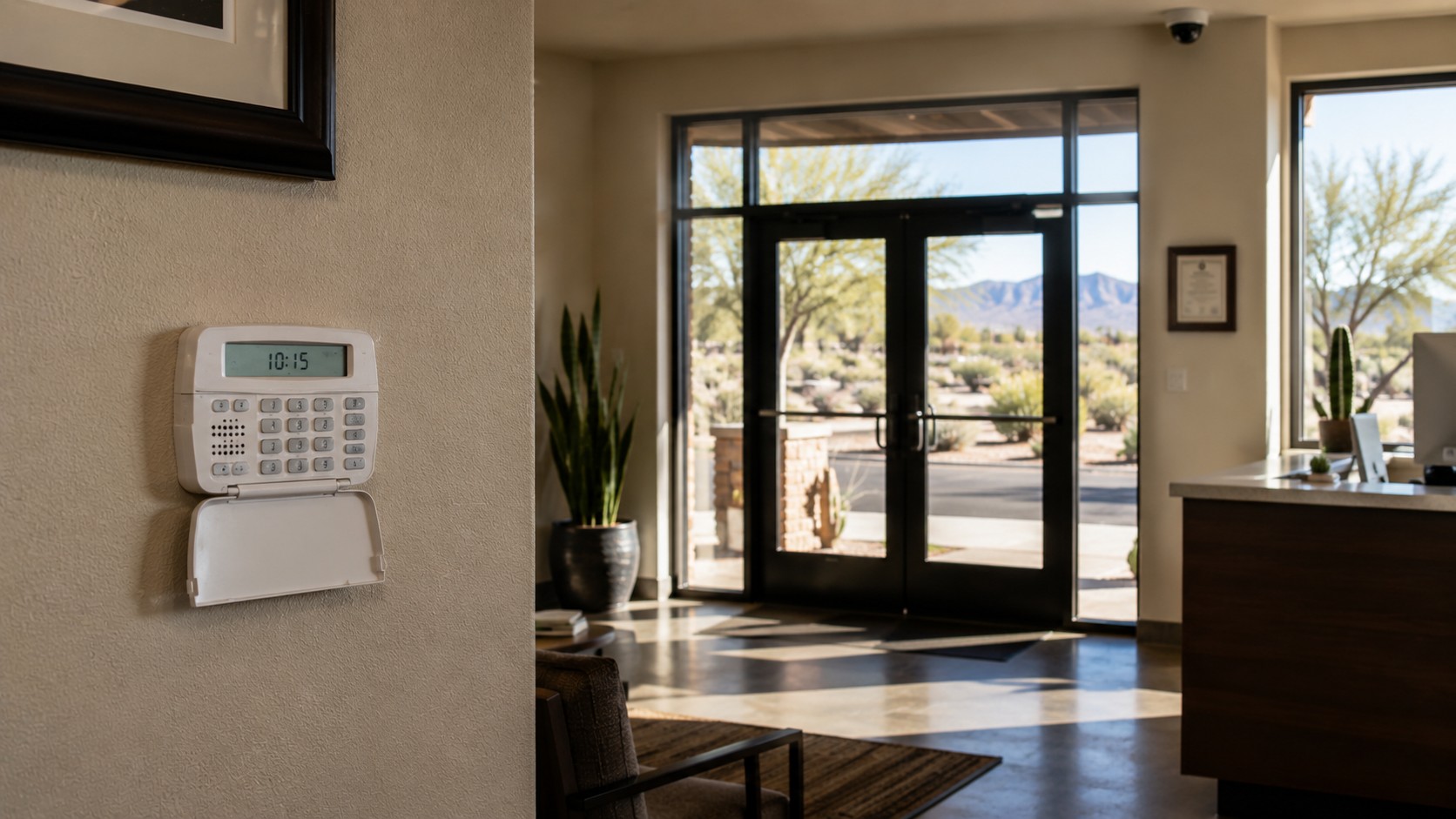
Without a monitored alarm system, an after-hours break-in looks like this: someone triggers a motion sensor, the siren goes off, the thief grabs what they came for, and the alarm stops ringing a few minutes later. Police may or may not be called. A neighbor may or may not report it. The owner usually finds out the next morning.
With a monitored alarm system, the same event looks different:
- The motion sensor trips at 2:47am.
- An operator at the monitoring center sees the alert, pulls the live camera feed, and verifies the threat in under 30 seconds.
- The operator dispatches police and calls the owner.
- Response is already moving before the thief is out of the building.
This is the single biggest gap we see in Santa Fe commercial systems. Owners have cameras. They have an alarm. They do not have anyone actually watching. Professional alarm monitoring services close that gap, and the cost is almost always lower than one serious incident's damage.
Fire, Life Safety, and the Rest of the Stack
A full commercial security setup in Santa Fe should also account for fire alarms and life-safety integration. Local code requirements change depending on building type, occupancy, and square footage. Many older Santa Fe commercial buildings are running on fire systems that have not been tested or updated in years — and some of those failures only surface during a fire marshal inspection.
Depending on the building, your system may also benefit from:
- Weapons detection for schools, government buildings, large event venues, or any high-foot-traffic property where AI-driven screening is appropriate
- Ballistic film and glass for storefronts and lobbies in higher-risk areas
- Sound masking for medical offices, law firms, or anywhere private conversations need to stay private
- Managed IT and cybersecurity that tie into the same network your physical security runs on
Most Santa Fe businesses do not need all of these. The right system is the one designed around what you actually have to protect — not a pre-packaged kit.
Buying a System Without Getting Stuck With a Bad One
Not every commercial security install in Santa Fe is good work. Here are the signs a company is cutting corners before you sign anything:
- No on-site walkthrough. Anyone quoting a system without walking your property is guessing.
- Vague retention or monitoring terms. If the contract cannot tell you exactly how long footage lives or who answers an alarm, that is the work quality you will get on install day.
- National call-center support. For a Santa Fe business, having service come from three states away means slow response, less accountability, and worse local context.
- Equipment lock-in. If the hardware only works with one provider and you cannot switch, you are paying premium for a cage.
- No training plan. A system your managers cannot actually use is a system that gets half-used. Training is part of the install — not a separate expense.
A good commercial security partner walks your property, listens to how your business actually runs, and designs a system around that. They hand you a clean dashboard, a short training session, and a number to call when something changes.
Is Your Santa Fe Business One Break-In Away From a Very Bad Week?
Most businesses do not think about their security system until the morning after something goes wrong. By then, the choices that mattered — where the cameras pointed, whether someone was monitoring, where the DVR was stored, whether access credentials were current — were all made months ago.
Wired designs, installs, and supports commercial security systems in Santa Fe for businesses that want to get those choices right before they matter. Our local team handles the full stack — cameras, access control, monitoring, and fire — from one number. No national call centers. No equipment you are stuck with. No install you cannot actually use.
Want to know exactly where your property's weak points are? Contact Wired today for a free on-site walkthrough. We will show you the three most likely places a Santa Fe intruder would exploit — and what it would take to close them before anyone tries.