How to Prevent Warehouse Theft: A Facility Manager's Guide

Wired
If you want to know how to prevent warehouse theft, start by looking inside your own building before you look out at the parking lot. Most warehouse loss comes from internal theft, not break-ins. The fastest path to stopping it is a mix of strong access control, smart camera placement, and after-hours alarm monitoring that catches problems early.
Quick Answer: The best way to prevent warehouse theft is to control who can enter each part of your building, watch the spots where loss happens most (docks, receiving, high-value storage), and back it all up with 24/7 alarm monitoring. Most warehouse theft is internal, so access logs and camera coverage matter more than tall fences.
Why Most Warehouse Theft Comes From the Inside
Internal theft and employee collusion drive more warehouse loss than outside break-ins do. Industry data shows internal and external theft together make up about two-thirds of all shrink, and inside theft alone often costs more per incident than shoplifting. Workers know the schedule. They know the cameras. They know which pallet will not be missed.
Outside threats are growing too. According to Verisk CargoNet's 2025 supply chain report, cargo theft losses jumped 60% in 2025 to nearly $725 million. The report named warehouses and distribution centers as one of the top targeted location types in the country.
So you have two real risks. People you trust inside. Organized crews outside. A real plan has to handle both.
Where Does Warehouse Theft Actually Happen?
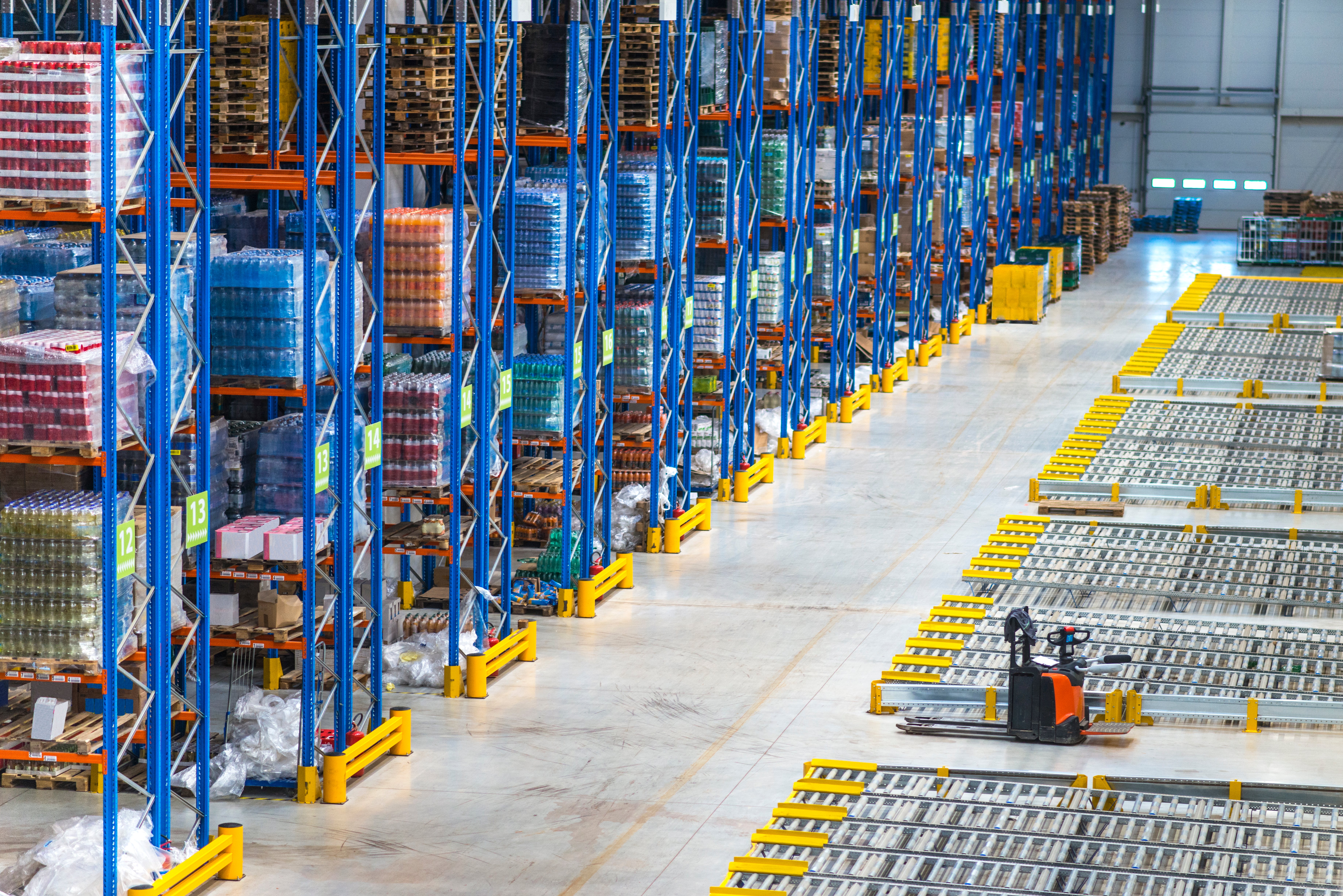
Most warehouse loss happens in a few specific zones. If you focus your prevention plan on these spots, you cover most of your risk.
- Loading docks and receiving bays. Goods change hands here. Workers can fudge counts. Doors stay open. This is the number one problem zone.
- High-value SKU storage. Electronics, copper, tools, meat, alcohol. If it has resale value, it is a target.
- Trash compactors and dumpsters. Workers hide product to pull from the dumpster after their shift.
- Side doors and employee exits. Easy spots to slip out with small items.
- The yard and trailer parking. Thieves take whole trailers. Crews pull cargo from sealed loads.
How Do You Prevent Warehouse Theft With Access Control?
Access control is the foundation. Without it, cameras and alarms are mostly cleanup after the fact. You need to know who came in, what door they used, and what time.
Modern commercial access control systems let you set permissions by person, by door, and by time of day. A dock worker can swipe into receiving from 6 a.m. to 4 p.m. and nowhere else. A manager can have wider access but still gets logged every time. If product goes missing on a Tuesday at 2 p.m., you know exactly who was in that zone.
Here is what good warehouse access control looks like:
- Key card or mobile credentials at every exterior door
- Separate permission groups for receiving, shipping, office, and high-value storage
- Time-based rules so badges only work during scheduled shifts
- Audit logs you can pull up after an incident
- Instant deactivation when someone leaves the company
That last point matters. Old keys are a top cause of after-hours warehouse theft. Pulling a digital credential takes 30 seconds. Re-keying a lock takes a week.
Where Should You Put Your Security Cameras?
Cameras work best when they cover the spots where loss actually happens. Most owners point too many cameras at the front entrance and too few at the dock. Flip that.
Place high-resolution security cameras at:
- Every dock door, with a clear view of the trailer and the dock floor
- Receiving zones where pallets are checked in
- High-value cages and locked SKU rooms
- All exterior doors and employee entrances
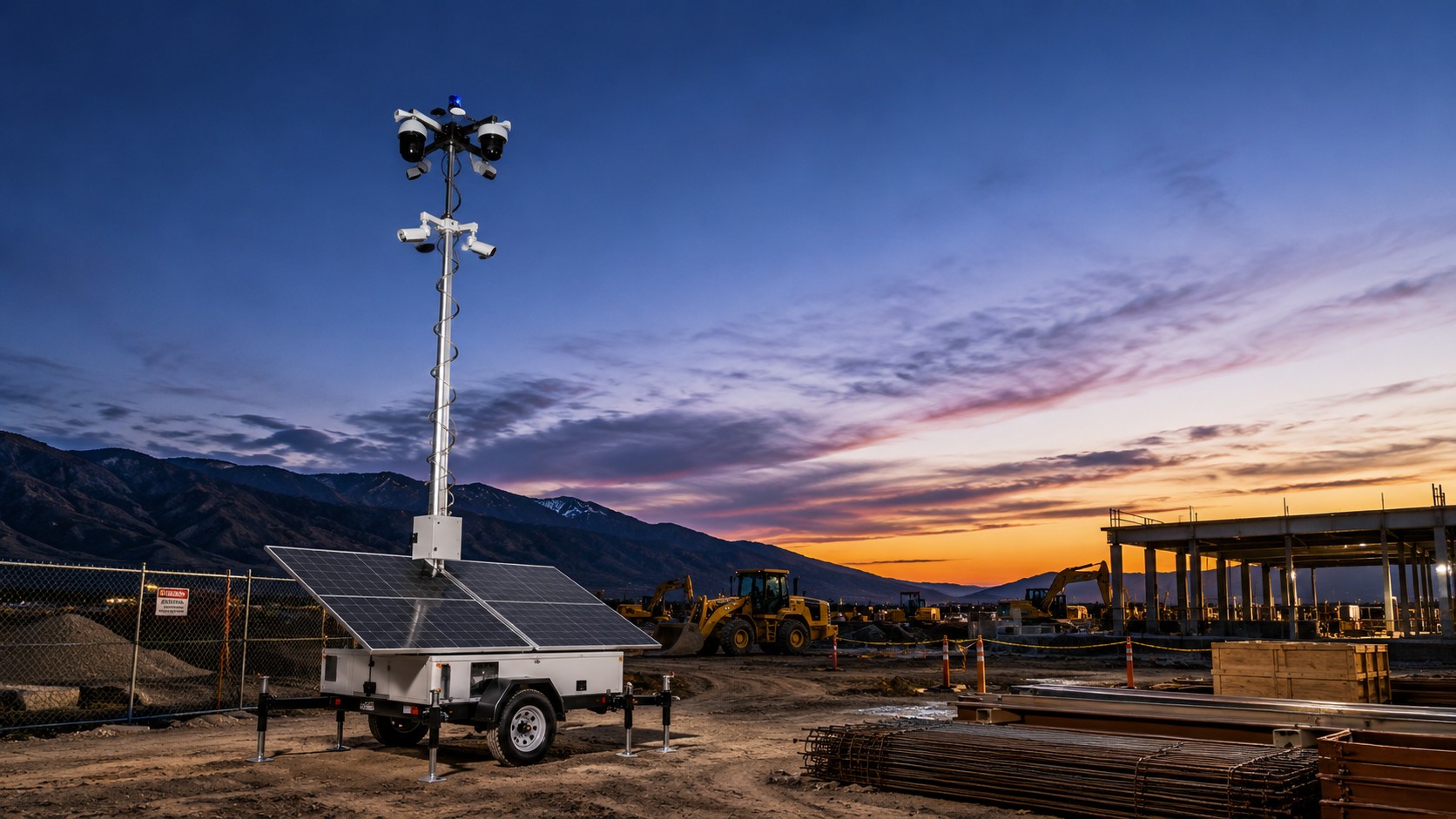
- The yard and trailer parking, with license plate capture at the gate
- Loading aisles where forklifts move product
Pair cameras with motion alerts after hours. A camera that nobody watches has limited value. A camera that sends a phone notification the second someone crosses the dock at 2 a.m. actually protects your inventory.
What Stops Warehouse Theft After Hours?
Monitored alarms stop warehouse theft after hours by triggering a real response in minutes. The building is empty. Police response times depend on someone calling in. A commercial alarm monitoring service closes that gap.
Here is how monitored alarms work. Sensors on doors, windows, and motion zones trip when something moves. A central station sees the alert in seconds and calls dispatch. For most warehouses, that means a response within minutes instead of waiting for a passerby to notice broken glass at sunrise.
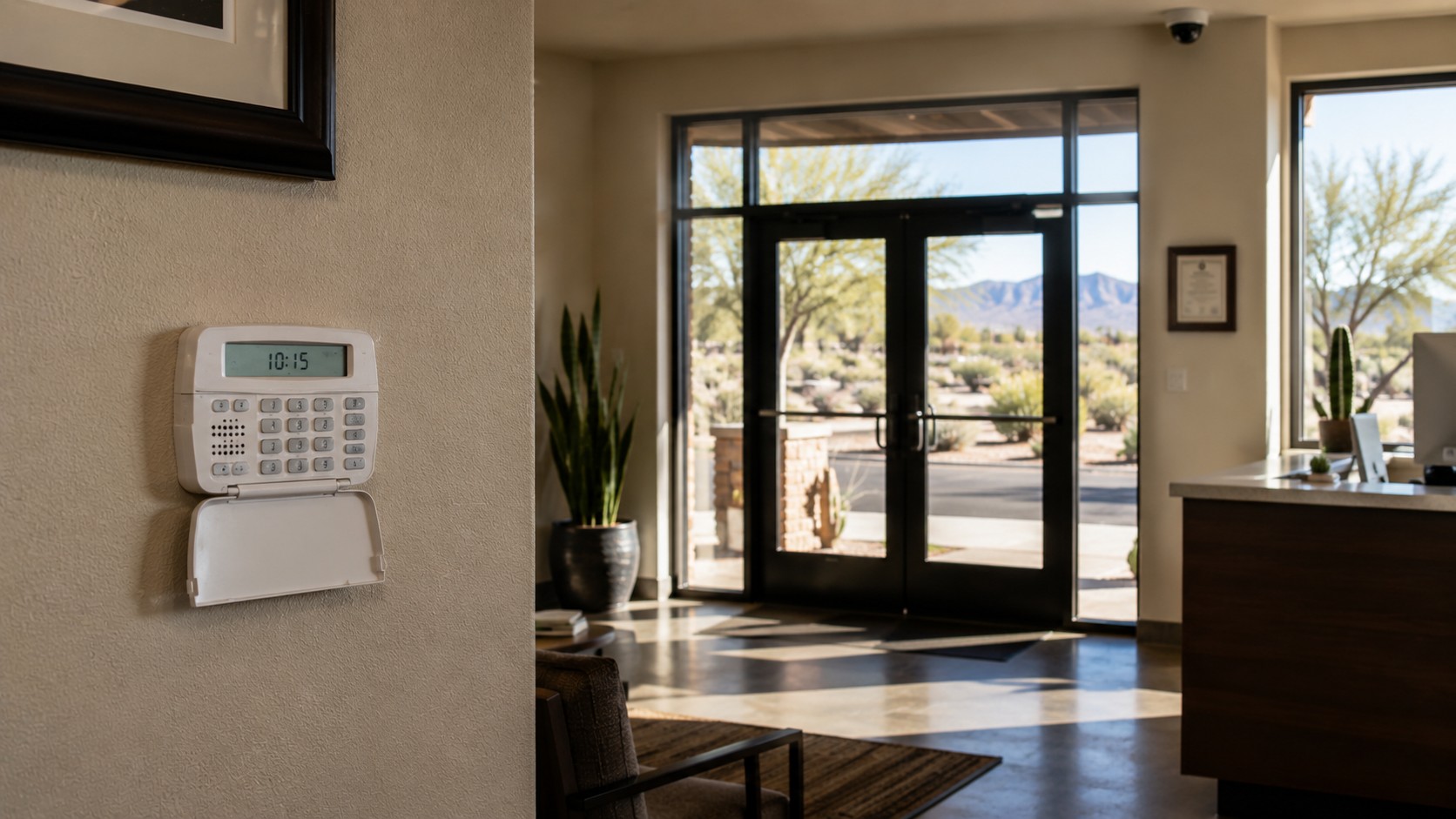
Pair monitoring with strong commercial burglar alarm systems at every entry point. The two together create the layered after-hours protection that actually works for warehouses with valuable inventory.
What's the Best Way to Prevent Warehouse Theft? Layer It.
No single tool stops warehouse theft on its own. Cameras catch what happened. Access control limits who can do it. Alarms cover the hours nobody is there. You need all three.
A layered prevention plan looks like this:
- Audit your current access. Who has keys or badges right now? When did they last get reviewed?
- Map your high-risk zones. Docks, receiving, high-value SKUs, exits, yard.
- Add access control on every exterior and high-value interior door. Set permissions by role and shift.
- Install cameras at every loss zone with after-hours motion alerts.
- Connect a 24/7 monitored alarm system to every door and motion sensor.
- Train your team on the system. Visibility deters theft. Most people will not steal where they know they will get caught.
- Review your access logs and footage monthly. Patterns show up before big incidents.
Common Questions About Warehouse Theft Prevention
What is the biggest cause of warehouse theft?
Internal theft is the biggest single cause of warehouse loss. Employees, sometimes working with outside collusion, account for a major share of all warehouse shrink. That is why access control logs matter so much. They tell you who was where and when.
Do security cameras really stop warehouse theft?
Cameras alone do not stop theft. Visible cameras paired with active monitoring and posted signs do. The deterrent comes from the feeling that someone is always watching.
How much do warehouses lose to theft each year?
Losses vary by warehouse and sector, but the trend is climbing. Cargo theft alone hit nearly $725 million in 2025, with the average single theft worth more than $270,000. For one Albuquerque warehouse, even a single bad incident can wipe out an entire quarter.
What is the fastest way to start preventing warehouse theft?
Start with an access audit. List every door, every key, every badge, and every person who has one. Most warehouse owners are shocked at how many old credentials are still active. Closing that gap costs almost nothing and stops a real source of loss right away.
Protect Your Warehouse the Right Way
Wired has helped Albuquerque businesses lock down warehouses, distribution centers, and commercial buildings since 2005. We design commercial security systems that mix access control, camera coverage, and 24/7 alarm monitoring around your real workflow and your real risk zones.
If you are ready to find the gaps in your current setup, contact our team for a walkthrough of your facility. We will show you exactly where your loss is most likely happening and how to stop it.