New Mexico School Security Requirements for K-12

Wired
New Mexico school security requirements are more detailed than most administrators realize — and the gaps in many schools are putting students, staff, and districts at risk. The New Mexico Public Education Department (NMPED) requires every school to have a documented Safe Schools Plan, and the state has invested over $25 million specifically for school safety upgrades. Meeting these requirements isn't just about compliance. It's about being ready before something goes wrong.
This guide covers what New Mexico requires from K-12 schools, what most schools are still missing, and how the right security system covers every requirement — from cameras and access control to weapons detection.
Why New Mexico School Security Has Become a Bigger Priority
School safety in New Mexico has received serious legislative attention in recent years. In 2023, the state legislature passed Senate Bill 131, appropriating $25 million for public school safety and $75 million for local school priorities — with funds eligible for security infrastructure, technology, and equipment.
The NMPED Safe Schools program requires every school district to have a Safe Schools Plan (SSP) in place for every building. That plan must include a school emergency operations plan (EOP). PED provides templates, rubrics, and guidance — but implementation falls entirely on the district. There is no state inspector who shows up and checks your cameras. That means many schools have plans on paper that don't match what's actually installed.
The stakes are real. A school that can't account for who is on campus, can't detect a threat at the door, or can't alert staff and law enforcement fast enough is not meeting its duty to protect students — regardless of what the SSP says.
New Mexico School Security Requirements: The Core Categories
While NM school security requirements are less prescriptive than, say, cannabis dispensary rules, NMPED guidelines and DHS K-12 school security standards define clear expectations across five areas. Here's what every school should have in place.
1. Physical Access Control
Controlling who enters your campus is the foundation of school security. Unauthorized access is the single most preventable precursor to a school safety incident.
Best practices required or strongly recommended for New Mexico schools include:
- Single point of entry during school hours — all visitors must enter through the main office or a controlled vestibule before accessing any part of the building
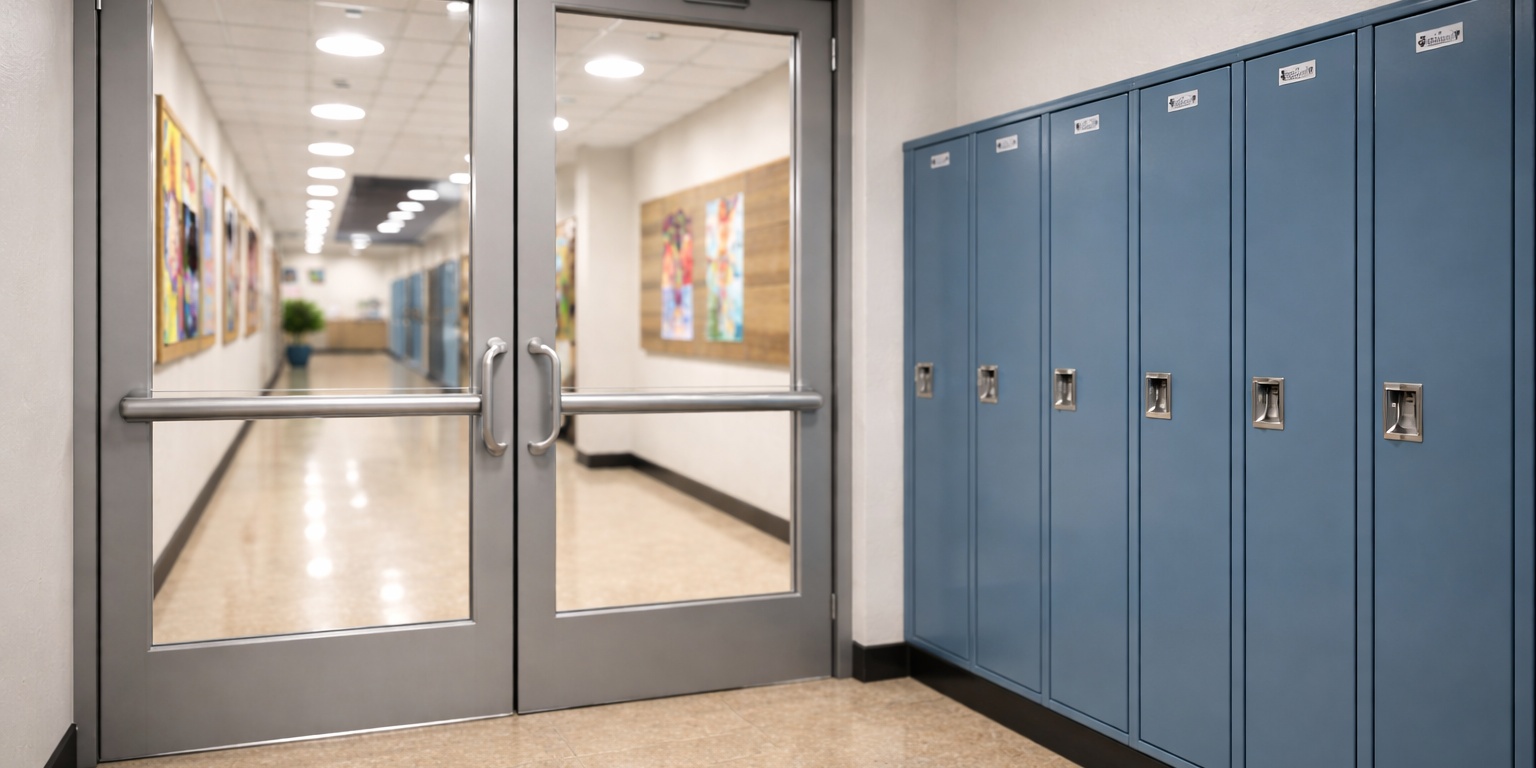
- Locked perimeter doors at all times during school hours — interior and exterior doors must not be propped open or left unlocked
- Credential-based access for staff — keys are increasingly inadequate because they can't be tracked, revoked, or audited after the fact
- After-hours access management — evening events, sports, and weekend activities should have controlled access limited to authorized individuals only
- Vestibule or airlock entry — a two-door entry system that keeps visitors in a controlled space until verified by office staff before they enter the building
Most school break-ins, unauthorized entries, and campus threats start with an unsecured door. A propped emergency exit, a door held open by a student, or a key shared between contractors is all it takes. Traditional key systems give you no way to know who used a door, when, or whether they should have been there at all.
Wired installs Verkada access control and smart lock systems that replace traditional keys with individual credentials — keycard, fob, or mobile. Every door event is logged with a timestamp and user identity. If a staff member leaves, their access is revoked instantly from any device. Administrators can lock down every door on campus simultaneously from a phone in an emergency.
2. Video Surveillance
Cameras are a baseline requirement in every serious school safety framework — and they need to be the right cameras, placed correctly, with footage that's actually accessible when it's needed.
NMPED and DHS K-12 guidelines call for:
- Coverage of all entry and exit points — every door that connects the building to the outside must be covered
- Coverage of common areas — hallways, cafeterias, gymnasiums, parking lots, and bus loading zones
- No coverage in private areas — cameras are barred from restrooms, locker rooms, and counseling areas where students have a reasonable expectation of privacy
- Footage retention sufficient to support incident investigations — most school safety experts recommend a minimum of 30 days
- Secure, tamper-proof storage of recordings — footage must be protected from deletion or tampering
- Remote access — administrators and law enforcement need to be able to pull footage quickly when an incident occurs
Many older school camera systems have two critical problems: poor image quality that makes identification impossible, and on-site DVRs that can be damaged, stolen, or go offline without anyone knowing. Neither is acceptable when you need footage to respond to an incident or support a law enforcement investigation.
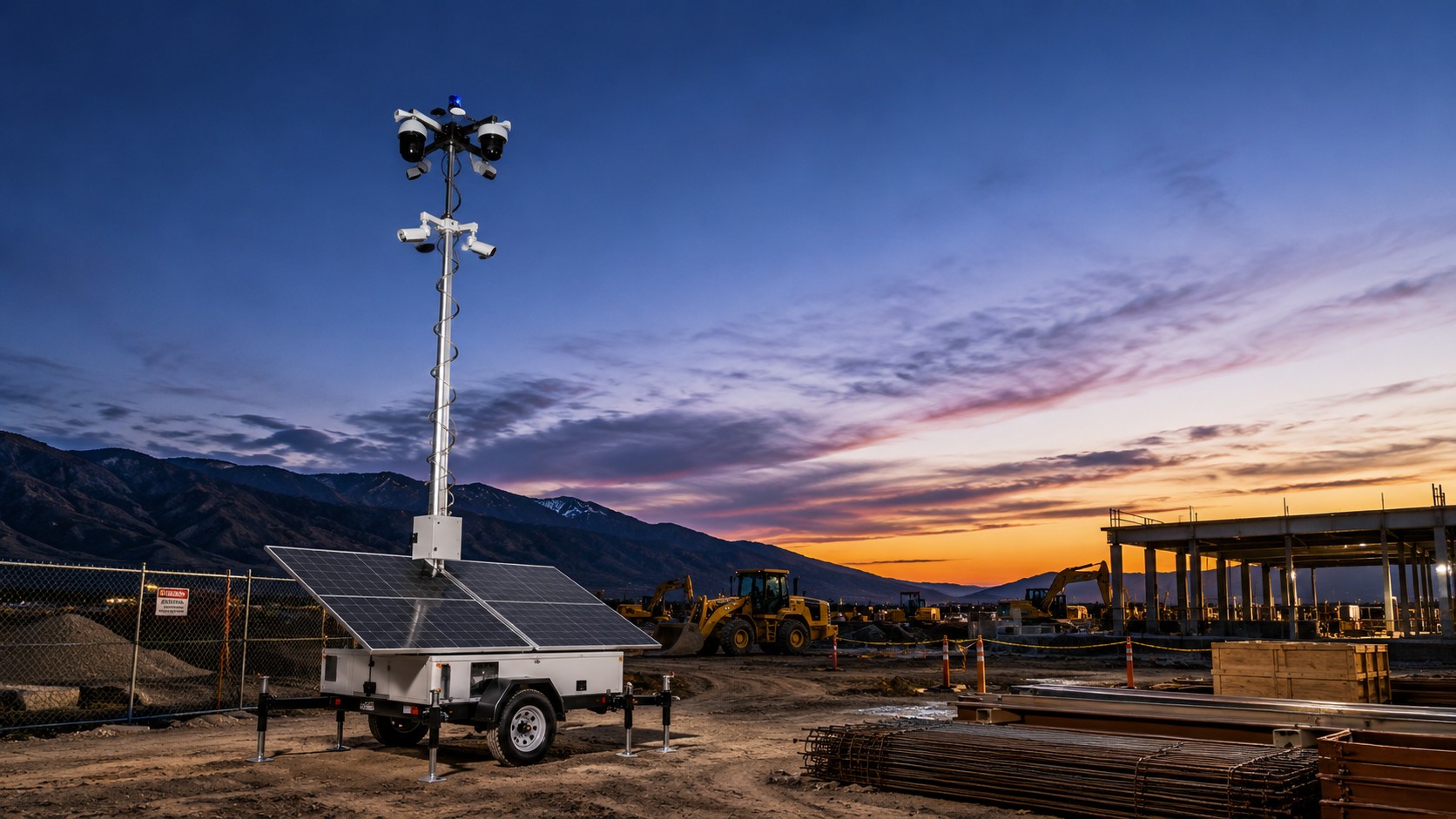
Wired's security camera installation team designs coverage plans specifically for school environments — ensuring every entry point and common area is covered with no blind spots, while keeping cameras out of private areas. We install Verkada cameras that record in 4K with cloud-based storage, automatic offline alerts, and footage accessible from any device in seconds. AI-powered search lets administrators find a specific person or event across all cameras in moments.
3. Weapons Detection
This is the area where New Mexico schools have the biggest opportunity — and the biggest gap. Traditional metal detectors slow entry to a crawl, require staff to operate them, and create bottlenecks that actually increase risk during high-traffic arrival times. Most schools have simply never installed them for that reason.
There is a better option now. Modern AI-powered weapons detection systems screen every person who walks through without stopping — no emptying pockets, no single-file lines, no wand screening.
Key requirements and considerations for school weapons detection:
- Screening at primary entry points — the main entrance and any secondary entries used during school hours should have detection coverage
- Minimal disruption to normal entry flow — systems that create bottlenecks or slow arrival create their own safety risks and are rarely used consistently
- Real-time alerts to security staff with enough detail to intercept a threat before it enters the building
- Documentation of detection events for administrative review and security planning
Wired installs the Evolv Express weapons detection system — the same technology used in stadiums, airports, and large venues — designed specifically to handle high-volume school entry without stopping anyone. Students and staff walk through at normal pace. Evolv's AI detects concealed firearms and other weapons in real time and sends an immediate alert to security staff. It dramatically reduces the staffing burden of traditional screening while actually improving detection accuracy.
For schools that want an additional layer, Wired also installs ZeroEyes gun detection — an AI system that analyzes camera feeds in real time and alerts trained human analysts the moment a firearm is visually detected on camera, anywhere on campus. The alert goes to on-site staff and law enforcement simultaneously, with an average response time that can mean the difference between intervention and tragedy.
4. Alarm Systems and Emergency Communication
An alarm is only useful if the right people know about it fast enough to respond. New Mexico school safety requirements include emergency operations planning that specifies how staff and law enforcement are notified when a threat occurs.
Schools need:
- Monitored alarm systems covering all perimeter entry points and high-risk areas
- Panic button capability for teachers and staff — the ability to silently trigger an emergency alert without using a phone or intercom that could escalate a situation
- Mass notification capability — the ability to alert the entire campus instantly via intercom, strobe lights, or other visible and audible signals
- Integration with law enforcement — the system must be capable of notifying local police with enough detail to respond effectively
- Active shooter drill compliance — NMPED requires that active shooter drills include parent/guardian notification and follow documented protocols
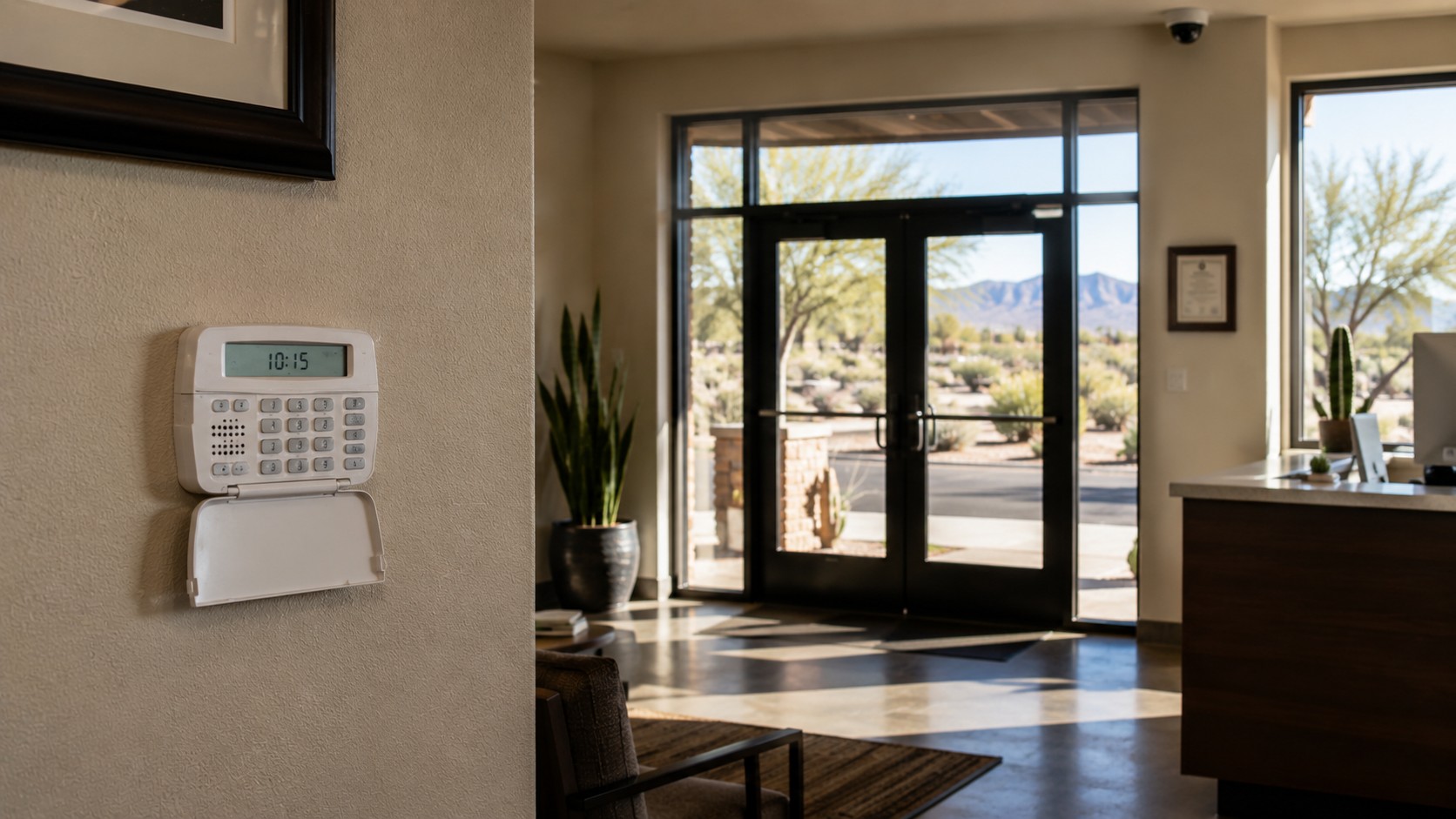
Verkada's integrated alarm system connects directly to cameras and access control. When a panic button activates, the monitoring team sees live camera footage of the triggered location immediately. Doors can be locked down automatically. Staff and law enforcement receive simultaneous alerts with location data. Everything is logged for after-action review and documentation.
5. Visitor Management and Documentation
Every person who is not a student or staff member is a potential risk if they're not verified, logged, and escorted. Most schools still rely on a paper sign-in sheet at the front desk — which is almost entirely ineffective as a security measure.
What schools are expected to have in place:
- Visitor check-in and identity verification — every visitor should have their ID checked and their visit logged before entering any part of the building beyond the main office
- Sex offender screening — visitors should be screened against registered sex offender databases before being granted access
- Visitor badges — visible identification that lets staff immediately recognize who belongs in the building and who doesn't
- Contractor and vendor access logs — maintenance workers, delivery drivers, and vendors must be logged the same as any other visitor
- Records retention — visitor records should be retained long enough to support any incident investigation
A clipboard and a pen aren't a visitor management system. They don't screen for threats, they can't be searched when something happens, and they're not integrated with anything else in your security plan. Verkada Guest replaces the paper log with a digital system that checks ID, screens against sex offender databases, prints a badge, and creates a searchable, timestamped record of every visitor — all in under 60 seconds.
What Most New Mexico Schools Are Still Missing
Even well-run districts often have these gaps:
- Outdated camera systems with low resolution footage that can't identify faces or read license plates
- On-site DVRs with no cloud backup — one power surge or theft and your footage is gone
- Traditional keys with no audit trail — no way to know who was in which building, when
- No weapons detection at entry — relying entirely on staff to visually spot a concealed weapon
- Paper visitor logs with no ID verification and no sex offender screening
- Disconnected systems — cameras, alarms, and access control from different vendors that don't communicate with each other
- No documented maintenance records for security systems — required for SSP compliance
How One Integrated System Covers Every Requirement
Mixing equipment from different vendors creates the gaps that get schools in trouble. A unified platform that connects access control, cameras, weapons detection, alarms, and visitor management — all in one place — is easier to manage and far easier to document in your Safe Schools Plan.
Here's how Wired maps directly to NM school security requirements:
- Physical access control: Verkada door readers and smart locks with full audit logs and instant remote lockdown
- Video surveillance: 4K Verkada cameras with AI-powered search, cloud storage, and automatic offline alerts
- Weapons detection: Evolv Express at primary entry points for walk-through AI screening with no disruption to arrival flow
- Visual gun detection: ZeroEyes analyzing camera feeds in real time with simultaneous alerts to staff and law enforcement
- Alarms and emergency response: Integrated monitoring with panic button support and mass notification capability
- Visitor management: Verkada Guest with ID verification, sex offender screening, badge printing, and searchable logs
- Documentation: Wired provides written maintenance records for every service visit — exactly what your SSP compliance requires
New Mexico Has the Funding. Does Your School Have the System?
New Mexico has committed real money to school safety — $25 million in dedicated safety funding and $75 million more available through the Public School Capital Outlay Act. Many districts are sitting on access to funding and haven't yet built the security infrastructure to match it.
Wired works with K-12 schools across Albuquerque, Rio Rancho, Santa Fe, and throughout New Mexico to design and install security systems built around NMPED requirements — and built to protect students every day.
Ready to see where your school stands? Contact Wired today for a free school security consultation. We'll walk through your facility, identify the gaps, and build a plan that covers every requirement.