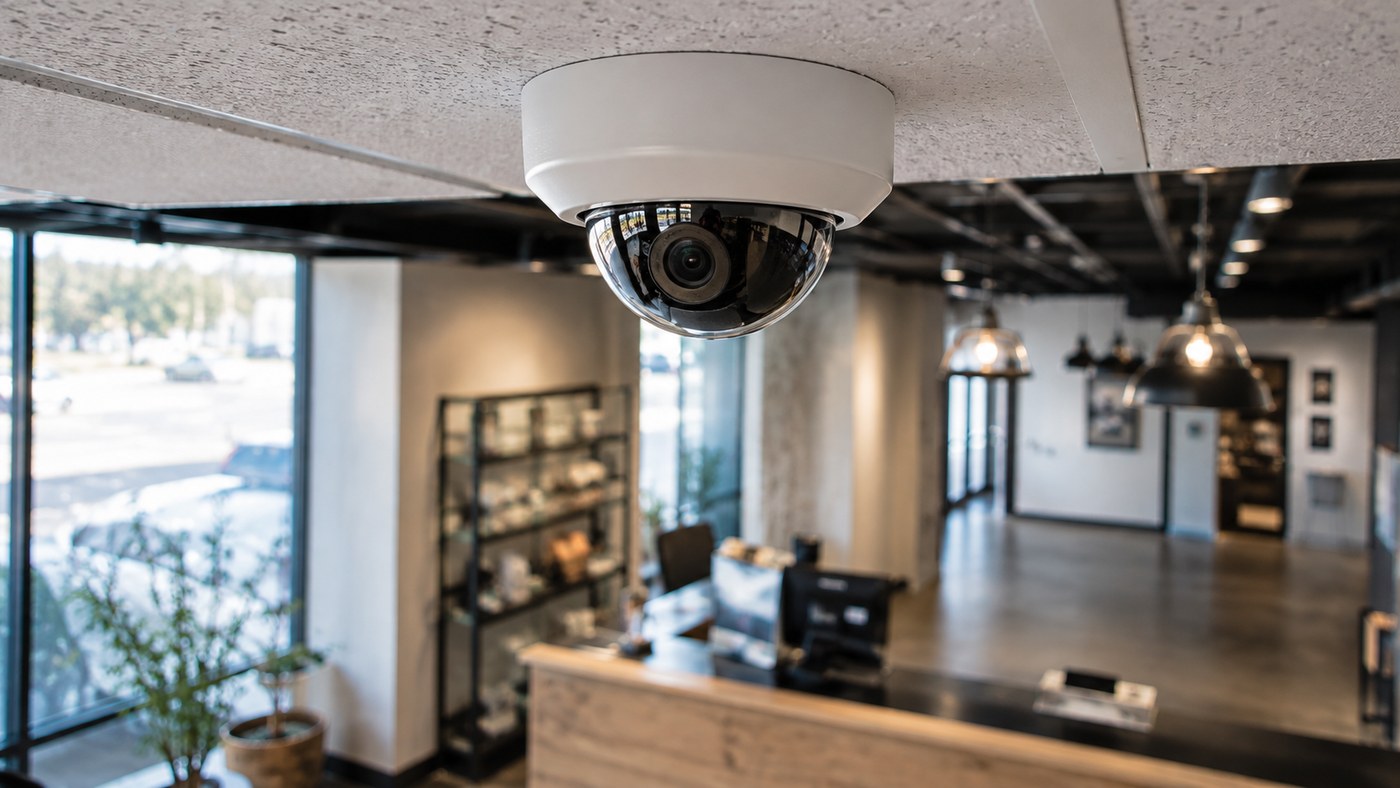
Is It Legal to Record Audio on Security Cameras in New Mexico?

Wired
Quick Answer: In New Mexico, it is generally legal to record audio on security cameras as long as one person in the conversation agrees to it. New Mexico follows one-party consent for audio. Still, recording private conversations you are not part of can break the law, so know the limits before you turn audio on.
Wondering if it is legal to record audio on security cameras in New Mexico? The short answer is usually yes, because New Mexico is a one-party consent state for audio recording. That means as long as one person in the conversation agrees, which can be you, the recording is generally allowed. Video and audio follow different rules, though, and that is where business owners get tripped up.
You put in security cameras to protect your people and your property. Adding audio feels like a natural upgrade. Before you flip that switch, it helps to know where the line sits, so a tool meant to protect you does not turn into a legal problem.
Quick note: this article explains the general rules, not legal advice. Recording laws get complicated fast, so check your exact setup with a New Mexico attorney before you rely on audio.
Is It Legal to Record Audio on Security Cameras in New Mexico?
Yes, it is generally legal to record audio on security cameras in New Mexico because the state uses one-party consent. Under that rule, a recording is allowed when at least one person in the conversation knows about it and agrees. Since you consent to your own security system, recordings you are part of usually qualify.
The trouble starts with conversations you are not part of. Placing a hidden microphone to capture two other people talking privately, with none of them aware, can cross into illegal territory. So the safest path is to record audio only where you have a clear, honest reason and never to secretly capture private talks between others.
What Is the Difference Between One-Party and Two-Party Consent?
One-party consent means only one person in a conversation needs to agree to the recording, while two-party consent means everyone does. New Mexico is a one-party consent state, so you can record a conversation you take part in without asking permission from the other side. That single rule shapes what your cameras can legally capture.
This matters more than most owners realize, especially if your business crosses state lines. Some states require every person to consent, and a few take a stricter view of audio than New Mexico does. So if you record calls or run cameras at locations in other states, check each state's rule before you assume New Mexico's applies.
- One-party consent: one person agrees, which can be you. This is New Mexico.
- Two-party consent: everyone in the conversation must agree. Common in stricter states.
- Crossing state lines: the stricter state's rule can apply, so play it safe.
Why Are Audio and Video Rules Different?
Audio and video follow different rules because the law treats listening and watching as separate acts. Video in public or semi-public areas of a business faces fewer restrictions. Audio triggers wiretapping and eavesdropping laws, which are stricter and carry bigger penalties.
This surprises a lot of owners. You can often film an area legally, yet recording the sound in that same area can break a different law. Because the audio side carries more risk, treat it with extra care and set it up on purpose, not by accident.
Where Does Audio Recording Cross the Line?
Audio recording crosses the line when you capture a private conversation you have no part in and no one in it agreed to be recorded. The key idea is a "reasonable expectation of privacy." A person has that expectation in some places and not in others.
Here is a simple way to think about it:
- Lower privacy expectation: a front counter, a public lobby, a sales floor where people know a business is watching.
- Higher privacy expectation: restrooms, changing areas, break rooms, and private offices where people expect to talk freely.
Recording sound in those high-privacy spots is where owners get into real trouble. So keep audio to open, business-facing areas and keep it off entirely in private ones. Federal wiretap law also applies on top of state rules, and you can review the federal standard through the U.S. Department of Justice before you decide.
Can You Record Audio of Your Employees?
You can record audio of your employees in New Mexico in general work areas, but not in spaces where they expect privacy. A sales floor, warehouse aisle, or service counter is usually fair game. A break room, locker area, or private office is not.
Employees have privacy rights, and crossing them can lead to complaints or lawsuits even in a one-party state. So the smart approach is to record only where there is a clear business reason and to keep audio out of personal spaces entirely. Being upfront with your team also builds trust and lowers the chance of a dispute later.
Should Businesses Record Audio at All?
Many businesses skip audio and stick with video, because video alone covers most security needs with far less legal risk. A clear picture of who entered, when, and what they did solves the vast majority of incidents. Audio adds risk without always adding much protection.
That said, some settings do benefit from sound. A cash-handling window, a dispute-prone service desk, or a spot with a history of verbal threats can be safer with audio. The right move is to decide area by area, not to switch audio on across the whole building. Our team helps you plan commercial security camera installation that puts the right coverage in the right places across Albuquerque and New Mexico.
Plan Your Camera Coverage on Purpose
Planning your camera coverage on purpose keeps you on the right side of the law and gets you better footage. Random camera placement leaves gaps and can point audio where it should not go. A real plan matches each camera, and each microphone, to a clear purpose.
Wired maps your property, flags the private zones where audio should stay off, and aims coverage where it does the most good. Related reading helps too: our guide on who legally owns your security camera footage after a crime and our breakdown of drone recording over your business property in New Mexico both cover the privacy side of surveillance.
What Happens If You Record Audio Illegally?
Recording audio illegally can lead to civil lawsuits and even criminal charges, depending on the situation. Someone who was recorded without consent in a private setting may sue for damages. In some cases, illegal recording is a crime with fines or worse.
On top of that, footage captured illegally can get thrown out as evidence. So an owner who set up audio to protect the business can end up unable to use the very recording they needed. That is why getting the setup right from the start matters so much.
How Do You Set Up Audio Recording the Right Way?
You set up audio recording the right way by limiting it to business areas, keeping it off in private spaces, and documenting why each microphone exists. A clear, intentional setup protects your business and holds up if anyone ever questions it. Guesswork does the opposite.
Wired handles that planning for you. We know which areas raise flags, how to configure audio responsibly, and how to keep your system both effective and defensible. That local knowledge saves you from a costly mistake.
Get Your Security Cameras Set Up Right
Get your security cameras set up right by working with a local team that understands both the technology and the rules that come with it. A camera system is only an asset when it protects you legally as well as physically. The wrong setup can do the reverse.
Wired designs and installs commercial security camera systems for businesses across Albuquerque and all of New Mexico, with coverage planned to fit your property and stay on the right side of the law. Contact us for a free assessment and get a system that protects your business the smart way.